Thursday, December 31, 2015

Constipation

Constipation: Infrequent and frequently incomplete bowel movements. Constipation is the opposite of diarrhea and is commonly caused by irritable bowel syndrome (IBS), diverticulosis, and medications. Paradoxically, constipation can also be caused by overuse of laxatives. Colon cancer can also narrow the colon and thereby cause constipation. A high-fiber diet can frequently relieve constipation. If the diet is not helpful, medical evaluation is warranted.


MedTerms (TM) is the Medical Dictionary of MedicineNet.com.
We Bring Doctors' Knowledge To You

What the Wall Street Journal Tells Us About Complications After Surgery: Not Much

The Wall Street Journal published an article on Christmas day that told the story of an 83 year old woman who suffered a heart attack after a joint replacement at a rural hospital.  The story serves as an introduction to a piece about the higher cost and poorer care delivered at rural hospitals.  There are certainly some very interesting points I was not aware of with regards to financial incentives provided by the government to do procedures at rural ‘critical access’ hospitals, as well as higher 30 day mortality after joint replacement surgery at these rural hospitals.

The Wall Street Journal article does provide this nugget from a Harvard public health researcher: “Patients are getting bad outcomes, probably because they are getting procedures at hospitals without the experience to do it well.”  

This certainly may be true, but no data exists in the article to back-up this assertion.  Are there more infectious complications of the surgery?  Are there more re-operations? Are the surgeons that operate at these centers less experienced?

The aim of the initial CMS initiative to expand access to care for rural patients seems to have worked. More patients are getting surgery closer to home as a result.  It is troubling that mortality rates are higher at these hospitals.  Perhaps the answer is to take away the incentives and move surgeries back to the larger hospitals.  I don’t know, and the article isn’t particularly helpful in answering those important questions. I would hope the folks in our profession who help shape public policy, like the Harvard physician quoted in the study, would be a little more careful in implying causation when all that has been discovered is a hypothesis generating correlation.  My hope is that he isn’t advocating for changes to public health policy based on simple correlations.

I do take issue with the story used to make this point.  Unfortunately, a heart attack is a complication of any surgery.  It is not clear from the story what parts of care provided at this rural hospital were substandard.  Patients at teaching hospitals do have heart attacks post-operatively as well. Differences in outcome may relate to delays in access to subspecialists you need in this situation.  Unfortunately, this article doesn’t shed light on any of this.  It instead joins a laundry list of articles that leaves the distinct impression that something bad happened to a loved one at a hospital that was preventable. There are plenty of things I wish for.  

I would love to have a light saber, I would love even more to travel at light speeds in the Millenium Falcon, and most of all I would love to live in a medical world free of any harm.  Elon Musk would lead me to believe we are a lot closer to flying in a Millenium Falcon than we are to working in a zero harm environment.  Surgery, especially, is not close to a zero risk endeavor.  While I have found estimates reported in the literature to be overstated at times, as many as 10 million patients (out of 200 million undergoing non-cardiac surgery) worldwide are estimated to suffer a major cardiac complication. There is a possibility that your 80 year old grandmother will have a complication of surgery even if it takes place at an ivory tower institution, and even if every single medical and surgical practice standard is met.

As we usher in 2016, I do have a solution that will definitely sate everyone’s desire for zero risk.  In order to get to zero risk, I advocate we stop operating.  I feel safe in guaranteeing that there will be no complications of surgeries this coming year if there are no surgeries.

The author is a cardiologist based in Philadelphia.

Wednesday, December 30, 2015

How Should Errors In the Patient Medical Record Be Addressed?

This summer an article in USA Today talked about Regina Holliday’s efforts to make the medical record more easily and promptly available to patients so it becomes as a tool patients use as they engage in co-managing their own care. Her cause is just and her story is compelling, so I was dismayed at the pushback saying: Not so fast. There are lots of errors and ambiguities in the record, so it is in everyone’s best interest to make the record hard for patients to obtain.

What a concept.

The commonest examples listed  by opponents of patient access to patient information reflected a combination of poor communication with patients and concern about the extra work that transparency might require for institutions and clinicians. For example:

“…the majority of patients don’t understand differential or provisional diagnoses and want those removed, because they say they are an error. The majority of patients don’t understand trade versus generic drug names, and want those removed because they are an error. The majority of patient’s don’t understand autopopulation of fields (when you click normal) and say the doctor didn’t ask me those things, and want them removed because they are an error; the majority of patients don’t understand spontaneous abortion, and definitely want that removed it, because they never had an abortion; the majority of patients don’t want “dependence on” anything included in their records, and want it removed because it’s an error…. they are very unhappy with all the errors in their medical record. And then, there are the legitimate errors due to poor documentation on admission, hospitalists who see the patient once and don’t review the record adequately, and nursing staff who just want to get their charting done and go home.”

Wow! Everyone who works with medical records knows that the record is full of both errors and ambiguity.  The question is what to do about it. There are two general categories of response.

(1) Make it hard for the person with the most to gain or lose (that would be the patient) to see the record, because that reduces the awareness of the problem and the pressure to fix it.

(2) Make it easy for the person with the most to gain or lose (that would be the patient) to see the record, because that increases awareness of the problem and creates both incentive and opportunity to fix it.

I understand the implications of cumbersome, user-hostile, and error prone documentation. Like all clinicians, I get 100+ page documents after my patient’s 5 day stay in the tertiary care center, where key data is intermixed in (obscured by) a flood of trivia, and which no one has gone through or vetted. Like all clinicians, I have to deal with the letter from the orthopedist about my patient’s  which incorrectly states she is HIV positive.

I spend all day with patients, trying to help them understand their health (or illness) and use the health care system. I am painfully and exhaustingly aware of how complex medicine is, and how imperfect our information and documentation systems are.  I just don’t think that hiding the flaws from the patient  makes any sense.

Look at it this way. What if my bank said they didn’t want to give me an itemized statement of my transactions, explaining that it includes technical financial terms, is hard to understand, and is likely to have errors? They don’t want me to be confused, upset, or angry, so if I submit a written request and pay a reasonable copying charge, they will send me my balance and a summary limited to total deposits, withdrawals and interest within 30 days?  I’d lose confidence in my bank and find another. And I would tell all my friends to do business elsewhere.

When an institutions or a clinician tells a patient that the record cannot be made promptly available because it is too ambiguous, has errors, and might be upsetting, that is a terrible and frightening message. It undermines trust. A reasonable patient will ask, if I can’t trust the institution to share with me in real time an accurate accounting of what they do and why, is there any reason I should trust them to put me to sleep, cut me open, and take out parts? Or irradiate me? Or infuse toxic chemicals?

If I were a malpractice attorney, I think I would want a drawer full of letters from hospitals explaining that they are not making the record transparent to the patient because of ambiguity and errors. I can hear it now: “Ladies and gentlemen of the jury. The hospital has admitted in writing that their documentation is ambiguous and often incorrect. Why should we believe their claim that the information in the record supports their statements that….?”

The excuse “we need to make it hard to access the record because it is poor quality” just doesn’t work for me. The reverse is true. We need to make it easy for the patient to access the record so we can do a better job of making it accurate and usable. The best way to make the record accurate and understandable is to make the default be that the patient knows what is going into the record when it is going into the record and while it is being used, not days, weeks, or months later when it has been retroactively revised or redacted in the interest of the institution or clinician.

We should all document care with the assumption that we are recording what we are thinking, and why we are doing what we are doing, with the information we have at hand. That is, we are telling the truth. This way, we and the patient are on the same page, both literally and figuratively.  If the record accurately reflects what we are doing and the information we are using, even though it may at times be confusing, ambiguous or contain errors, we have nothing to hide.

Yes, it may require more time and effort on the part of the clinician and the system. So be it.  Inconvenience for the clinician, the institution, or the clinical and support staff,  pales beside the imperative of putting the best interest of the patient as the first priority that trumps all others.

Making Sense Of Price And Quantity Variations In U.S. Health Care

Blog_medical invoice

A recent study by Zack Cooper, Stuart Craig, Martin Gaynor, and John Van Reenen has documented the remarkable variations across regions and age groups, and within regions, in U.S. health care spending. Previously, the Dartmouth Atlas project studied variations using Medicare data on people over 65, and the 2013 Institute of Medicine study showed no association between spending and quality in both over-65 Medicare and under-65 private insurance markets.

The Cooper study steps up the game by using a massive data set on utilization and prices for the 14 percent of Americans covered by UnitedHealthCare, Aetna, and Humana, combined with Medicare claims data. Highly recommended is the terrific graphical interface developed by The New York Times to see what’s happening in your world.

Three Reasons Why This Study Is Important

1. Cooper and coauthors find that prices paid by insurance companies to providers vary dramatically both across regions, and within regions.

This is an eye-opening result that lays out the lack of transparency in prices in the under-65 private insurance markets. First, Cooper and associates show that markets with more hospitals exhibit lower prices — competition works.

Second, even within markets, prices are all over the map, even for common procedures such as colonoscopies. This has little to do with increasing the number of hospitals, but everything to do with the lack of pricing transparency, like ordering from a menu without any prices.

2. The researchers find a remarkable degree of variation in health care utilization across regions, both in the over-65 and under-65 population.

When Dr. John E. Wennberg started collecting data on hospital and physician utilization patterns in rural Vermont during the 1960s, he found large variations in tonsillectomy rates (for children) and hospital bed use (for older people). The Cooper study finds as much variation in health care utilization — that is, how doctors treat patients — in the under-65 private insurance markets as there is in the elderly Medicare population. (Technically, they find the coefficient of variation in expenditures, holding prices constant, for the under-65 is 0.32; among the over-65 it is 0.30.) Note it is important to recognize that when you hold prices constant, “expenditures” are a measure of health care utilization.

Furthermore, the correlation between what doctors do in the under-65 and over-65 cohorts is high; the Cooper group finds a correlation of 0.6 (where 1.0 is a perfect correlation). Other studies, such as this report comparing under-65 Blue-Cross Blue-Shield medical hospitalization rates with corresponding over-65 Medicare rates in Michigan regions (Figure 1), have found even stronger correlations. That is, regional utilization patterns for elderly Medicare patients provides a remarkably strong predictor of utilization rates in the under-65 private insurance population. Not perfect, perhaps—tonsillectomy rates in children could differ from hospice use among the elderly—but pretty close.

Figure 1

Skinner-Exhibit-1

Figure 1: The Association Between Medicare Medical Discharges (1996) and Medical Discharges of Adult Blue Cross Blue Shield Members (1997) among Michigan Hospital Service Areas. Source: Dartmouth Atlas of Health Care in Michigan.

What The Cooper Study Does Not Say

A casual reader of The New York Times article by Kevin Quealy and Margot Sanger-Katz, “The Experts Were Wrong about the Best Places for Better and Cheaper Health Care,” would be forgiven if they missed this critical point. By focusing only on total spending—price times quantity—they give the impression that Medicare data tells us nothing about private insurance markets. Not so.

We know that when Medicare spending is high, privately insured quantities tend to be high, as shown in Figure 1. Correspondingly, when prices in private insurance markets are high, Medicare expenditures are low. It’s not entirely clear why this latter effect holds, although one study finds that incentives to treat privately insured patients (as there would be if provider prices are higher), lead to less care for Medicare patients, with no discernable impact on patient health.

The article further suggests that when President Obama visited Grand Junction, he was visiting the wrong town, because prices paid by local employers for their employee health care were so high. However, President Obama is chief executive of the largest medical insurance plan on the planet—Medicare—and he should be visiting Grand Junction to discover how to prevent Medicare from bankrupting the federal government. Of course, this doesn’t preclude adding Rochester, NY to the President’s itinerary — a city identified by the Cooper study as being low for both private and Medicare spending.

3. The study highlights that policy solutions to address variations in health care quantities are very different from policy solutions to fix variations in health care prices.

Every year, patients are harmed because of too many procedures: they are exposed to radiation from excessive CT scans, or scarred for life from unneeded surgical procedures. Patients are also harmed by receiving too few effective treatments. The health impact of high prices is less direct; employers drop insurance coverage, or patients can’t afford their drug regimens. Thus, policy solutions for excess prices are different from policy solutions for quantities that are either too high or low.

Fixing price variation is already on the radar screen of many, including firms like Castlight that encourage patients to shop around for the cheapest prices. We cannot resist suggesting a more draconian solution, which is to limit privately insured prices to whatever Medicare charges in the region, plus 25 percent. (See this Health Affairs Blog post for details.) Under a price cap, hospitals and physicians could consolidate to reduce fragmented care; they just couldn’t jack up their prices.

Fixing variations in quantities is trickier. There are by now 777 Accountable Care Organizations (ACOs) in the U.S. whose goal is to both improve quality of care and reduce excess utilization. Some (but not all) are showing great progress towards that goal. A greater reliance on shared decision making to ensure that patients are getting treatments that they want, coupled with a focus on reducing potentially harmful treatments, are two additional approaches to scaling back excess care. Indeed, the “experts” were right that we can learn quite a lot from places like Grand Junction and La Crosse, WI about restructuring primary care and improving the quality of end-of-life care.

Looking Forward

The Cooper study takes dramatic strides forward by making private sector utilization and pricing data much more transparent than they have ever been. But more needs to be done.

The plans that shared their data should be commended. Those that have yet to do so should be encouraged (or forced) to do so, given the importance of the policy issues at stake and the need for price transparency so that patients can make better informed choices. Transparency is also important to ensure that newly formed ACOs don’t take advantage of their market consolidation by raising prices. It is worth noting that a pending Supreme Court decision could make matters worse with regard to transparency, not better.

We need to make progress not only in reducing unwarranted variations in how much care people receive, but also in reducing unwarranted variations in prices. We need better care and lower costs.

The Must Have "Mini-Skills" To Becoming A Millionaire

millionaire photo

Photo by Enkhtuvshin’s 5DmkII

Listen up! Of course you want to be a millionaire (how about a billionaire?)!  Who doesn’t? But do you have the skills that it takes to get there? Obviously there is some reason that some people are millionaires and some are not. It is not necessarily the skills that you already possess. Perhaps some seem super far fetched. But why not try to adopt them and get on board. Anything is possible if you put your mind to it and educate yourself with these “milli-skills”.

Sales

If you like it or not, sales is a humongous force in our world. Think about it, that is how we make money. We are always selling something. Even if you do not love sales, you have to be willing to learn sales and have an understanding of it.

Marketing

Right alongside sales, is marketing. Equally as important, you have to market yourself and create a brand. Don’t just provide marketing for your products, you are the face and who you want consumers to trust. Be clear and concise with your mission and advertise it out loud!

Communication

Now with your amazing sales skills and marketing, don’t you think some fantastic communication is needed? It sure is. With today’s technology, there is no reason not to communicate nonstop to allow your business to prosper. Every form of communication is a stepping stone that forms a ladder to success. You will make your brand well known through communication. Building on your communication will elaborate your business and success.

Money Responsible

The only possible way to make millions is to have respect for each and every dollar. Learn to take care of a small amount of money and then you should have no problem when dealing with loads of cash. Start now by balancing your account daily (even if it is just in your head). You have to be equipped to think of dollar signs at every waking moment. You have to be free of money fears.

Emotional Genius

If you have no problem dealing with your own emotions and tons of other people’s emotions then you might just be an emotional genius. You really have to be able to dive in and work with people’s emotional strengths and weaknesses. It’s part of the “game”. It’s not just about having money and ideas, it’s about caring as well.

Get Organized

This can’t make more sense than it already does. If you are organized OR get organized, then you will have a much easier time working in situations that are, let’s say, not so organized. Perhaps different types of work environments. You must be able to adapt easily and decision making will work accordingly.

Time Sensitive

List your priorities folks! Since we were little kids, we have made To-Do lists and put the most important To-Do’s on top. Listen to you inner-child and prioritize. Focus, focus, focus. Do what absolutely cannot wait first, then move on. Sure you will multi-task, but decide what can wait and what needs your undivided attention at the moment. Learn to manage your time.

Network

Always network and never stop. Network in your sleep. Every contact and every employee is a person in your network. You will all get things done, alone and together. Relationships are key for business and success. But don’t just rely on your contacts, they have to be able to rely on you as well. Networking works both ways. So don’t be a one-way street. Keep both sides moving.

Take these “milli-skills” and put them into play. Get on board to living your dream with much success. But don’t get too caught up in the end result. The path you take to get there is even more important than when it actually happens. You will be a better person if you treat each day and every person with the same respect that you desire. Now go and get to work!

Home to see you when you have a 10M+

Regards,

http://checkissuing.com/

Lifestyle, Freedom Warrant DPS Las Vegas?

Warrant Issued to DPS Las Vegas? We can help from Pariente Law Firm, P.C. on Vimeo.

The Secondly Change remains in which provides the citizen of the USA of America the right to bear branches. An amendment which is criticized today by those that advertise weapon safety as those who only advertise the right to own a gun have actually been recognized to lawfully exploit this regulation. As the legislation was actually originally in state for the security of a citizen as well as his/her family from outdoors forces that will lead to injury to all of them or for hunting, teams like the NRA utilize the change to be in a position to possess automated items which are actually mainly utilized for war as well as except such actions as this was actually initially put into make use of for.

Tuesday, December 29, 2015

The Year of the Hacker

flying cadeucii2015 was the year health care got serious about cyber security.

Hackers gave the industry no other choice.

The year started with a massive data breach at Indianapolis-based Anthem Inc., which the health insurer revealed on Feb. 4. Hackers roamed around in Anthem’s computers for six weeks and stole personal and financial information of 78.8 million customers, as well as the information of 8.8 million customers at Blue Cross and Blue Shield plans not owned by Anthem.

There have been 269 data breaches at health care organizations this year, according to statistics collected through Dec. 22 by the Identity Theft Resource Center. That’s actually down from 2014, when health care organizations suffered 333 breaches.

But the number of records stolen has soared to 121.6 million records stolen, up from less than 8.4 million records in 2014. Even without the Anthem breach, there were still 34 million records stolen this year from health organizations.
The health care industry accounted for one out of every three breaches recorded by the Identity Theft Resource Center.

“They can and are trying to break into everything,” Doug Leonard, president of the Indiana Hospital Association, said of hackers. He added, “It’s really on everybody’s radar screen in the health care industry.”

In a survey released in August by consulting firm KPMG, 81 percent of health care executives said their organization had suffered a cyber attack in the previous two years and 13 percent said they were being attacked daily.

In late November, the bond rating service Moody’s said it would now consider cyber risk in its evaluation of health insurers and hospitals, among other businesses. Moody’s will not evaluate the cyber security readiness of the individual companies it rates, but it could use cyber security in stress-tests of companies, much as it does now with weather disasters or acts of terrorism.

“As cyber risk becomes more pervasive, it will take a higher priority within our analysis,” said Jim Hempstead, an associate managing director at Moody’s who was the lead author of a Moody’s cyber security report released Nov. 23.

The risk of a data breach are far higher now for health care providers since the 2009 stimulus act funneled more than $30 billion to help the industry digitize its patients’ medical records. Now the federal government actually penalizes health care providers if they don’t use electronic medical records.

Also, Moody’s noted, more and more medical equipment uses the Internet to send and receive information, making that equipment vulnerable to hacking—and possibly to patient harm or disruption of services.

“We believe the sector’s risk awareness is high, a credit positive,” Hempstead wrote in the Moody’s report. “Most hospitals have completed or are in the process of installing expansive, new patient information systems which likely have better safeguarding features than prior technology.”

Leonard, the president of the Indiana hospital association, said his organization purchased cyber security insurance for the first time this year, because the association receives some sensitive information from its members. It also organized some teleconferences on cyber security for hospitals around the state.
Still, he said, no one really feels adequately protected from hackers, who even breached the federal Office of Personnel Management this year and stole employment records of millions of federal employees, including CIA spies.

“They are probably all suitably worried that they are taking all the precautions they know how to take,” Leonard said, “but with the sophisticated attacks going on, I don’t think anybody feels adequately protected.”

Indeed, in an October simulation of a cyber attack among 12 health insurers, conducted by the HITRUST Alliance industry group, only two companies even consulted their pre-prepared incident report plans.

“I’ve seen a dramatic improvement,” Ray Biando, chief information security officer at Illinois-based Health Care Service Corp., told the FierceHealthPayer news service, “but we still have a lot of work ahead of us.”

J.K. Wall is a health care reporter at the Indianapolis Business Journal and writes The Dose blog on the business of health care.

People Post: Staff And Board Changes In Health Philanthropy; Honors; Request For Proposals

Featured Topic Image - Grantwatch (640 x 360 at 72 PPI)

Happy New Year to GrantWatch readers! Here is some light reading for the holiday weekend.

Grantmakers In Health (GIH) has announced that six new members have been elected to its board. They are Ned Calonge, president and CEO of the Colorado Trust; Nichole Maher, president and CEO of Northwest Health Foundation, located in Portland, Oregon; Elena Marks, president and CEO of the Episcopal Health Foundation, located in Houston, Texas; Patricia (“Pat”) Matthews, president and CEO of the Northern Virginia Health Foundation, located in Alexandria, Virginia; Donald Moulds, executive vice president for programs at the Commonwealth Fund; and David Rousseau, vice president and executive director of health policy media and technology at the Henry J. Kaiser Family Foundation. These six high-level foundation staffers will officially join the GIH board in March.

The California Wellness Foundation’s board has elected three new members, who will begin serving in January. They include Xóchitl Castañeda, who has worked since 2001 as director of the Health Initiative of the Americas, a program of the University of California, Berkeley, School of Public Health. In addition, she is co-associate director of the University of California Global Health Institute’s Center of Expertise on Migration and Health and codirector of the University of California, Davis, Migration and Health Research Center. She is a medical anthropologist by training.

Read “Willingness to Pay for Cross-Border Health Insurance between the United States and Mexico,” a January 2008 Health Affairs article coauthored by Castañeda.

Arnold X.C. Perkins is another new CalWellness board member. Now a consultant and speaker on various subjects, including HIV/AIDS, Perkins is a former director of the Alameda County, California, Public Health Department. Another statewide funder, the California Endowment, awarded Perkins its one-time Health Equity Founders Award and created in his honor the Arnold X. Perkins Award for Outstanding Health Equity Practice.

The third new CalWellness board member is Pamela J. Simms-Mackey, associate director of graduate medical education at the University of California, San Francisco’s (UCSF’s) Benioff Children’s Hospital Oakland and an attending physician at Benioff Children’s Primary Care Center. In addition, she is an assistant clinical professor at UCSF’s School of Medicine.

Claire Chang has joined the Blue Cross and Blue Shield of Minnesota Foundation as a senior program officer. She will be focusing on “furthering the Foundation’s commitment to increasing health equity in Minnesota,” according to the foundation’s website. Before coming to the foundation, Chang was an associate vice president at Minnesota Philanthropy Partners. She holds a master’s degree in philanthropy and development from Saint Mary’s University, in Winona, Minnesota.

Stephanie Cuskley is the new CEO of the Leona M. and Harry B. Helmsley Charitable Trust. Previously, she was CEO of NPower, “a national nonprofit that mobilizes the tech community and provides individuals, nonprofits and schools with opportunities to build tech skills and achieve their potential,” according to a November press release. Cuskley succeeds John R. Ettinger, who was the first CEO of the Helmsley Trust. Health programs funded by the trust include Rural Healthcare (grants only awarded in seven Upper Midwest states) and Type 1 Diabetes.

Amy Latham has been promoted to vice president of philanthropy at the Colorado Health Foundation. Previously portfolio director for its Health Care and Health Coverage funding areas, Latham has worked at the foundation since 2008.

Yvette Mendez, formerly grant programs officer for the Rhode Island Foundation’s Health sector, has been named the deputy director of the Rhode Island Department of Human Services. She started her new job in November.

Michael Monopoli and Brian Souza have each been promoted at the DentaQuest Foundation. Monopoli, formerly director of policy and programs, is now vice president of foundation programs. Souza, formerly managing director, is now vice president of strategy and operations. The DentaQuest Foundation, a national funder, is the philanthropic arm of DentaQuest, a dental benefits administrator.

Read a popular post on Health Affairs Blog, GrantWatch section, titled “It Is Time To Make Oral Health An Integral Part Of Primary Care,” by Brenda Sharpe, Michael Monopoli, and Laura Smith, June 25.

ICYMI: Honors and Awards

Physician Arnold P. Gold received the United Hospital Fund’s Distinguished Community Service Award in October. The fund chose him for the award because he launched “what is now an international movement that is changing the culture of medical education and practice, and making a profound impact on thousands of health care professionals” and on patients and their families, according to a press release. Gold, who cofounded the Arnold P. Gold Foundation, came up with the idea of the White Coat Ceremony, which started in 1993 with a new class of medical students at Columbia University. The Robert Wood Johnson Foundation helped expand the ceremony to other medical schools. The Gold Foundation works with health care professionals “in training and in practice to instill a culture of respect, dignity and compassion for patients and professionals,” according to its website. The Gold Foundation derives most of its money from donations.

Former Colorado Gov. Richard Lamm (D) received the John K. Iglehart Award for Leadership in Health Policy at the 2015 Colorado Health Symposium, which is hosted by the Colorado Health Foundation. Lamm directs the Institute for Public Policy Studies at the University of Denver. The Iglehart award, named for the founding editor of Health Affairs journal, “recognizes a person whose wisdom, involvement and leadership consistently advanced the cause of health and health care for the people of Colorado,” according to a press release. Lamm has been the longest-serving (three terms) Colorado governor.

Read Lamm’s Health Affairs Narrative Matters essay from fifteen years ago: “Doctors Have Patients, Governors Have Citizens,” September/October 2000 issue. How have things in the health care system changed since then? Are some things still the same?

The John D. and Catherine T. MacArthur Foundation announced its Class of 2015 fellows on September 29. The fellows were each chosen to receive what is called a “genius grant” in common parlance. Each fellow receives $625,000. The 2015 fellows include environmental health advocate Gary Cohen, who is cofounder and president of Health Care Without Harm, which is “leading the global movement for environmentally responsible healthcare,” according to its website; and Heidi Williams, an economist at Massachusetts Institute of Technology (MIT). The foundation describes Williams as “an economist unraveling the causes and consequences of innovation in health care markets.” She is Class of 1957 Career Development Assistant Professor in MIT’s Department of Economics.

Keith Paul Klugman, director for pneumonia at the Bill & Melinda Gates Foundation, is among the newly elected regular members of the National Academy of Medicine (formerly the Institute of Medicine), according to an October 19 press release.

Request for Proposals (RFP)

The ABIM Foundation and the Council of Medical Specialty Societies urge physicians who focus on providing patient care to apply for a two-year grant from their new Professionalism Challenge Grant Program. The program will fund four projects designed and led by practicing doctors “who have promising ideas for overcoming an obstacle” preventing them from performing their work while following the principles and professional commitments defined in the 2002 publication, Medical Professionalism in the New Millennium: A Physician Charter. Four $25,000 grants will be awarded. The deadline for applying for a grant is January 19! For more details, read the RFP.

Folic acid

Folic acid: One of the B vitamins that is a key factor in the synthesis (the making) of nucleic acid (DNA and RNA).

A deficiency of folic acid after birth causes a kind of anemia, namely, megaloblastic anemia in which there is a paucity of red blood cells and those that are made are unusually large and immature (so-called blast cells).

Lack of adequate folic acid during pregnancy was first found to increase the risk for the baby to have a birth defect involving the spinal cord and brain -- a neural tube defect such as spina bifida (meningomyelocele) or anencephaly.

The association was then investigated between the mother's use of drugs that act as folic acid antagonists in the first trimester of pregnancy and the birth of a child with a congenital malformation (birth defect). It was found that folic acid antagonists increased the risk not only of neural tube defects but also of congenital heart malformations, cleft lip and palate, and urinary tract defects. Folic acid, it now is clear, reduces the risks for a remarkably broad gamut of birth defects.

In order for folic acid to be effective in preventing these birth defects, the vitamin must be consumed every day beginning before conception and continuing through the first three months of pregnancy. Educating women (and their doctors) about the importance of folic acid is going to require a major effort. According to one study, only 10% of women know that folic acid should be taken before pregnancy.

An adequate intake of folic acid appears important to the health of arteries, reducing the risk of second heart attacks and strokes (it may do so by lowering the level of homocysteine). Folic acid also may lower the risk of stomach cancer.


MedTerms (TM) is the Medical Dictionary of MedicineNet.com.
We Bring Doctors' Knowledge To You

Monday, December 28, 2015

Anemia

Anemia: The condition of having a lower-than-normal number of red blood cells or quantity of hemoglobin. Anemia diminishes the capacity of the blood to carry oxygen. Patients with anemia may feel tired, fatigue easily, appear pale, develop palpitations, and become short of breath. Children with chronic anemia are prone to infections and learning problems. The main causes of anemia are bleeding, hemolysis (excessive destruction of red blood cells), underproduction of red blood cells (as in bone marrow diseases), and underproduction of normal hemoglobin (as in sickle cell anemia and in iron deficiency anemia). Women are more likely than men to have anemia because of menstrual blood loss. In children, anemia is most commonly due to insufficient iron in the diet. Anemia is also often due to gastrointestinal bleeding caused by medications, including such common drugs as aspirin and ibuprofen.


MedTerms (TM) is the Medical Dictionary of MedicineNet.com.
We Bring Doctors' Knowledge To You

Why Meaningful Use Has to Go

flying cadeuciiWe don’t win anymore in health care. After repeatedly drilling in our heads that America’s sick care system is a disaster, that those who care for the sick are incompetent and stupid, and that the sick themselves are losers, Meaningful Use was advertised as the means by which technology will make health care great again. The program has been in place for 5 years and the great promise of Meaningful Use is just around the same corner it was back in 2011. The only measurable changes from the pre Meaningful Use era are the billions of dollars subtracted from our treasury and the minutes subtracted from our time with our doctors, balanced only by the expenses added to our medical bills and the misery added to physicians’ professional lives.

Meaningful Use, a metastasizing web of mandates, regulations, exclusions, incentives and penalties, is conveniently defined in the abstract as a set of indisputably wholesome aspirational goals for EHR software and its users, which stands in stark contrast to the barrage of bad news flooding every health related publication, every single day. Health care in America used to be the best in the world, but now our health care is crippled. Meaningful Use of EHR technology will improve quality, safety, efficiency, care coordination, and public and population health. It will engage patients and families, and it will ensure privacy and security for personal health information. With Meaningful Use leading the way, health care will be winning so much that your head will be spinning. You won’t believe how much we’ll be winning.

Be afraid, be very afraid

Bombastic? Laughable? Easily dismissible by educated people? Not so fast. According to Dr. David Blumenthal, president of the Commonwealth Fund, and former National Coordinator for Health IT, “we probably have the worst primary care system in the world”. Yes, worst system in the whole wide world, worse than Niger, Malawi and Somalia. Probably. According to a hobbyist “study” that extrapolates its “results” from a handful of other studies based on an admittedly inaccurate tool intended for different purposes, 440,000 people are killed in hospitals due to preventable errors each year – “that’s the equivalent of nearly 10 jumbo jets crashing every week”. Or, with a little more math, half of all hospital deaths, and one in six US deaths, are due to negligent homicide perpetrated by psychopathic doctors and nurses.

How is that for buffoonery? I suspect that the beautiful minds appalled at populist or outright racist fear mongering rhetoric claiming that thousands of Muslims were dancing on rooftops on 9/11 in New Jersey, have zero problems with self-servingly stating that “hospitals are killing off the equivalent of the entire population of Atlanta one year, Miami the next, then moving to Oakland, and on and on”, based on equally valid he-said-she-said evidence. Both virulent strains of outlandish demagoguery are insisting that they, and only they, can keep us safe from things that go bump in the night. Supersizing the ghoulies and ghosties and long-leggedy beasties makes us more likely to relinquish control of our lives to those who might deliver us from terror.

The Meaningful Use program rests on a narrative where medicine is witchcraft, our doctors are murderers, our hospitals are cesspools teeming with death, our citizens are Lemmings unable to wipe their noses, and the machines of the illuminati are our only salvation. When the premise of an action is delusional, one cannot expect the outcomes to be anything but.

Smoke and mirrors

When you read “studies” advertising that Meaningful Use increased the rates of mammography by 90% in three months, you should assume that the only thing that was increased is the rate of ticking boxes for stuff that was not documented before, and practically no material changes have occurred. When you feel vindicated by the 99% rate of patients given a clinical summary after each visit, keep in mind that the vast majority of those summaries were posted to a portal that nobody uses, or just fake-printed to PDF, and the few actually given out were dutifully tossed in the recyclable trash bin. When you read about the billions of dollars in tax money successfully spent on Meaningful Use, you should understand that this is just the tip of the iceberg, and the indirect costs to each and single one of us are larger by orders of magnitude.

For most of us simpleton believers, who mistook fiery demagogues for brave-hearted visionaries, the disappointment is a throbbing daily humiliation, manifesting itself in polite low-energy petitions to powerful bureaucrats to take pity on us and roll back some of the most onerous aspects of the program. There are signs indicative of some forthcoming acts of mercy, but those are as disingenuous as the original false narrative of Meaningful Use. After five years of Meaningful Use of EHR technology, the initial hope has failed to translate into promised change. Or has it?

From its inception, the Meaningful Use program had two sets of requirements. One set defines what EHR vendors must build to stay in business, and another set specifies what doctors and hospitals must do to collect gratuity payments from Medicare. Over time these requirements sets began to diverge. Once clinicians became conditioned to compulsively collect data, overt reporting is being replaced with covert extraction through the backend (i.e. application programming interfaces, or APIs). The Certified EHR Technology mandated by the program was never intended to extend abilities of clinicians as much as it was designed to generate standardized measures of their performance. Administrators and regulators cannot control an industry from afar without incessant measurement and the power to reward and punish individual practitioners. Meaningful Use is designed to enable remote control of medicine, its doctors and the people they serve.

We are not alone

Back in 2001 our rulers identified another field where America was losing big time. Education was a disaster, a huge mess with rampant disparities and across the board low quality. Like health care, education of small children is an ideal place for intervention if your aim is to control populations and increase the value derived from each person. With overwhelming bi-partisan support the ruling class passed the No Child Left Behind Act, mandating that all children are above average by 2014. An avalanche of funding for computers, measurements of schools and teachers and incessant standardized testing of students descended upon our schools. For the last fifteen years, schools were engaged in life and death accountability games of reward and punishment, and our children became merely biometric indicators for school and teacher performance assessments.

As 2014 came and went, with many children still stubbornly below average, with multitudes of teachers still burnt out, and education morphing into a misnomer for the standardized testing doomsday machine consuming all but the rich and privileged, the federal government took a step back and passed the Every Student Succeeds Act of 2015. Leaving aside the downright idiotic terminology used for naming acts of Congress, the new legislation is reluctantly beginning a process to diminish federal control of schools. Considering the cumulative damage to our education system, perpetrated by toxic bureaucratic ineptitude which is  crowding out the ability of real educators to address real problems, this halfhearted attempt may very well be too little too late.

Failure is not inevitable

I don’t know about you, but I am getting tired of having to live up to Winston Churchill’s image of America. We don’t always have to try everything else before we do the right thing. We shouldn’t have to wait fifteen years before declaring that in retrospective Meaningful Use was meaningless. We know now that it is. Removing a few reporting requirements for physicians, while beefing up patient scoring measures, is not enough. Playing with reporting periods at the last minute and granting ad-hoc exclusions to make people shut up, is not enough either. Randomly linking physician fees to Meaningful Use EHRs may be enough, but it’s beyond disgusting.  The Meaningful Use program must end. Plain and simple. And most importantly, the underhanded EHR certification schemes must be halted immediately.

Standardization, quantification, computerization, gamification, engagement, and infantilization of the populace in general, do not produce better educated or healthier citizens. Education reform has failed us on a grandiose scale. Health care reform, to which Meaningful Use is foundational, is based on the same failed concepts as education reform. It will also fail in due course and spectacularly so. It is actually failing as we speak and with the exception of elite institutions, which are benefiting financially from as much health care reform as can possibly be inflicted on the rest of us, we all know it’s failing badly. 2016 presents the perfect opportunity to demonstrate to the entrenched perpetrators that in America accountability is a two way street, and value is a freely defined personal concept.

American health care has been hijacked by very bad people, and it’s time for us to quit being sad little losers who just sit there and bitch. It’s time to take our health care back and it’s high time to deliver to those horrible people the thorough schlonging they so richly deserve. It’s time to make American health care great again.

In 2016, resolve to go out and vote. Vote in the primaries, vote in local and general elections, ignore the propaganda, educate yourself and as old Harry Truman advised us all, vote for yourself, for your own interest, for the welfare of the United States, and for the welfare of the world.

Sunday, December 27, 2015

The Quest For Zero Infections: A Fool’s Mission?

flying cadeuciiJoyce is sick.  I am in the intensive care unit, peering at vital parameters that glow on the screen above her bed.  My eyes linger on those numbers because it is easier than looking at her.  A fever rages, her core temperature reads 103.4 degrees.  Her white hair is plastered on her forehead with sweat, and a tube to help her breathe emerges from her mouth and heads to a ventilator that angrily tweets a musical alarm every few minutes.  Her breathing is painfully obvious.  Her stomach moves paradoxically inward on every breath, and I can see the muscles in her neck tense with the effort of every breath.  Mercifully, her eyes are closed.  A nurse walks in and starts to change a bag of fluids that is hanging by her bed.  I follow the flexible plastic tubing that arises from the bag to an infusion pump, and then to a catheter that snakes under a see-through dressing underneath Joyce’s left collarbone.  I ask the nurse about how long the catheter has been in place…’3 days’…I’m told.  I mutter about the possibility of a central line infection – the dreaded central line-associated blood stream infection (CLABSI).  The nurse shakes her head, and tells me – “we don’t get those anymore”.

CLABSIs are ground zero in the war on preventing patient harm.  The story entered the mainstream consciousness in the lyrical words of Atul Gawande in the New Yorker in 2007.  There he told a story of an unlikely Superman in the form of a critical care intensivist named Peter Pronovost. Dr. Pronovost was waging war against infections from these nefarious central lines that were saving and killing patients at the same time.  He published a landmark study in the New England Journal of Medicine that used an evidence-based intervention to dramatically reduce infection rates in the intensive care unit.  Some form of the implementation bundle that worked for Dr. Pronovost soon found itself in ICUs everywhere.  Dramatic reductions in CLABSI rates followed.

The remarkable part about this feel good story is that it seemed so easy.  The ICU I was in had seemingly reproduced this success as well.  I spoke to nurse after nurse who noted that CLABSI’s were fairly rare events at this point.  Everyone had a different theory about how this happened.  Some attributed this to the full barrier sterile technique used for line insertion, others to the limitations put in place to draw blood from central line catheters, while others felt it was the maintenance of the catheters after they were placed.  Regardless, everyone had CLABSI on the brain.  The government had mandated that hospitals report their CLABSI rates, and with this, hospital resources to blot out this particular black spot were committed in earnest.  It should come as no surprise that infection rates would drop.  The size of the effect impressed me.  Hospitals, in my experience, are like large lumbering elephants.  It usually takes three forms, five signatures, and at the end of it all, I am told HIPAA won’t allow it.  No matter what it is.

In 1958, Hawthorne Works, a Western Electric factory outside of Chicago commissioned a study to see if their workers would become more productive in higher or lower levels of light.  The workers’ productivity improved when changes were made, but slumped when the study was over.  It was suggested the productivity gains were made because the workers were being observed. This has come to be known as the Hawthorne effect.  Not surprisingly the simple act of measuring, observing or testing has an effect on the performance of subjects.

There was no doubt that implementing a variety of maneuvers to reduce infections was having an impact, but this is not the whole story. In this particular ICU, for instance, I noticed that blood cultures were now rarely drawn from the central lines themselves.  They were now drawn peripherally.  This means hunting for a vein to thread a needle into to get a culture.  It was so much easier to take an empty syringe, hook it up to a catheter that was sitting in a vein and draw back 10 ml of blood.  The patient didn’t have to be stuck with a needle and a nurse/physician didn’t have to spend precious minutes hunting for a vein in a critically ill patient whose veins are either collapsed or buried in tissue laden with fluid.  Requiring peripheral cultures, though, does make plenty of clinical sense.

Cultures from catheters have a high false positive rate: organisms may grow that are colonizing the catheter but not causing an infection.  Deciding between the two – colonization or infection – can be challenging and is many times a clinical decision.  The CDC criteria for CLABSI in this regard is monolothic: any blood stream infection with a pathogenic organism counts against you.  Secondly, the act of collecting blood from a catheter is thought to raise the risk of introducing micro-organisms into the blood stream, and causing an infection.  These two points have been known for some time, but it was the specter of public reporting of these infections that really pushed hospitals to move in a systematic fashion to develop rigid protocols about cultures being drawn from central lines.  I applaud this new found fastidiousness with regard to cultures, but it does, however, make comparisons of infection rates somewhat challenging.  How much of the decline in infection rates is secondary to a more restrictive policy related to ordering blood cultures?  It is hard to know, and even Pronovost’s landmark study cannot escape from the bias inherent in performing a non-randomized study that in essence tracked infection rates over time.  Regardless of the size of the true effect, Pronovost’s accomplishment cannot be understated.  I can think of little that has been as clinically impactful in as short of a time.  To get hospital CEOs, CMO’s, infection control committees, nurses, technicians and physicians on the same page with regards to evidence based practices for line infections is a true tour de force.

Of course, a hard lesson I learned after a peanut better and jelly sandwich orgy applies here too – there can be too much of a good thing.  Pronovost started on a mission to reduce infections, but yet that is not what we try to do now.  Our current mission statement is to get to zero.  CLABSI’s have become the poster child for ‘preventable harm’,  a phrase that does not just imply,  but unabashedly states that any infection associated with a central line can be prevented.  Patients and stakeholders have carried this torch forward. Medicare has pushed forward with policies that would withhold reimbursement for any CLABSI’s, because of course, they are all deemed preventable.

The evidence for a zero is non-existent.  Pronovost’s study reduced infection rates a remarkable 66%.

2012 study provocatively titled: Zero risk for central line-associated blood stream infection: Are we there yet? found that we were not there yet.  The study based in 37 ICUs in South Wales sought to identify the longest time a central line could stay free of infection with another ‘insertion intervention bundle’.  The authors reported a significant reduction in rates of infection with their prevention bundle, but importantly found no catheter dwell time that was associated with zero risk.  It should not take a study to say this.  In today’s non-Star Trek world, the reality of critical care medicine frequently involves the insertion of central line catheters that are life saving.  These catheters are placed, not in the vacuum of space into sterile objects, but rather within the milieu of a hospital teeming with pathogenic organisms, and into patients that are far from sterile.  Our attempts to sterilize the human environment is an exercise in reducing the burden of micro-organisms, not eliminating them.

Tying reimbursement to an impossible goal places inordinate pressures on hospitals, which have consequences that are unintended, but quite predictable.  The response of hospitals and their staff takes many forms, and I have already written about the new found parsimony in blood cultures being drawn from central lines.  Other maneuvers are less sanguine.  A study done to compare infection control practitioners  to a standardized computer algorithm had disturbing results.  The medical center that had the lowest rate of central line infections as judged by infection control practitioners (2.4/1000 central-line days) had the highest rate by the standardized computer algorithm (12.6/1000 central-line days).  The study authors concluded that the variability of infection rates seen when compared to a reference standard suggests significant variation in the application of standard CLABSI definitions.  It would appear that the CLABSI definition was being applied in a subjective fashion to report rates much lower than an objective standard.  Welcome to a world that tells you what you want to hear.

The narrative that surrounds the noble sounding ‘prevention of harm’ strips meaning from the very phrase when applied in such a liberal, incoherent fashion. The reality is that patients arrive at hospitals and critical care units in extremis.  In that hospital room we struggle to make Joyce whole again.  It is a struggle we may not win because the very interventions we use to save a life can also take a life. The fervent hope of everyone in Joyce’s room is that on balance the benefits of the interventions taken are greater than the risks.  Over time, mortality rates have fallen in intensive care units – a fact that is remarkable given that patients in ICUs today are sicker than ever.  This fall in mortality is driven by progress in treatment of underlying disease states, as well as improvement of processes in medicine that predates ProPublica-style transparency and ‘performance’-based reimbursement.

Remarkably, yet predictably, the current iteration of ‘transparency’ combined with unrealistic expectations may be doing more harm than good.

Spondylosis

Spondylosis: Degeneration of the disc spaces between the vertebrae. Spondylosis is common with aging and affects virtually everyone to some degree after the age of 60 years. When severe, it can cause local pain and decreased range of motion of the spine, requiring pain and/or anti-inflammatory medications.


MedTerms (TM) is the Medical Dictionary of MedicineNet.com.
We Bring Doctors' Knowledge To You

Saturday, December 26, 2015

Lumpectomy

Lumpectomy: The surgical removal of a small tumor, which may be benign or cancerous. In common use, lumpectomy refers especially to removal of a lump from the breast. Lumpectomy, often with chemotherapy or radiation therapy, can be an alternative to mastectomy in cases of nonmetastatic breast cancer.


MedTerms (TM) is the Medical Dictionary of MedicineNet.com.
We Bring Doctors' Knowledge To You

Give The Gift of the Health Care System

Screen Shot 2015-12-26 at 5.36.34 AMThe United States health care system is a big, expensive mess, and the people working in the system today often don’t even know how to start learning about the system, and it’s problems.  My own frustration with the health care system – and lack of teaching about it during medical school – lead me to write The Health Care Handbook: A Clear and Concise Guide to the US Health Care System with my colleague Elisabeth Askin.  The goal was to create an understandable primer on the health care system for providers so that we can all work together to improve the system and help our patients.

We have partnered with THCB to provide excerpts from the 2nd edition of the Handbook, which will provide background and insight on important health care issues that we face today.  We would love your questions, comments and feedback.  Today’s excerpt provides a brief overview of the state of the US health care system today.

Cost 

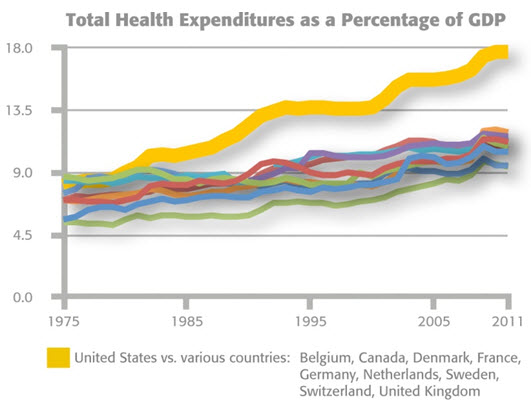
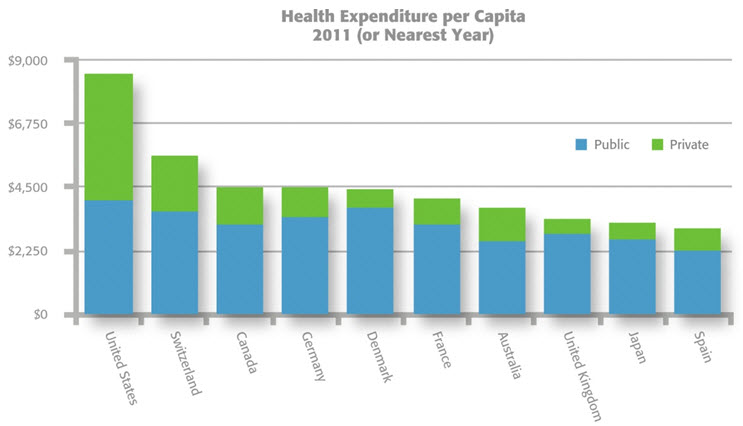
The U.S. currently spends more than 17% of its national gross domestic product (GDP) on health care, far more than any other country in the world. Health care spending now averages almost $9,000 per American,1and health care is the fastest growing industry in the country.2Private (nongovernmental)health care spending accounts for a large portion of the difference between spending in the U.S. and in other industrialized countries.

Img1

Img2Organisation for Economic Co-operation and Development, “Health Statistics2013,” June 2013. Note: Values in U.S. $ Purchasing Power Parity. Data for Japan and Australia refers to 2008.

Access

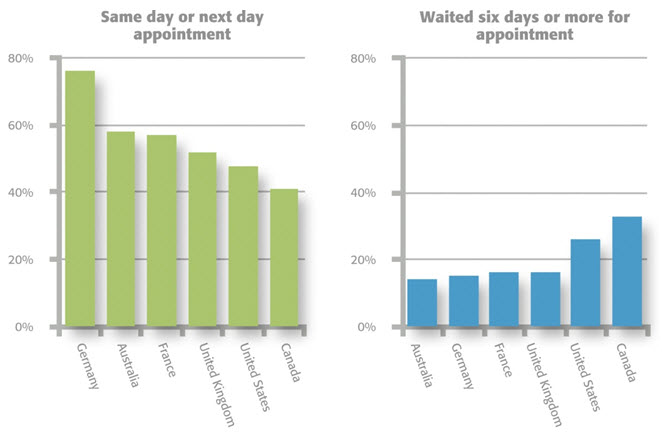
The U.S. has fewer physicians,hospital beds, physician visits,and hospitalizations per capita than most other industrialized countries.3 Eighty-five percent of Americans report having a regular source of ongoing care, but more than a quarter encounter difficulty accessing the healthcare system.4 There are large disparities in access by type of health insurance coverage.

Img3

Agency for Healthcare Research and Quality, “2012 National Healthcare Quality and Disparities Reports,” June 2013. Note: Health insurance status refers to those 18–64 years old. Poor refers to household incomes below the federal poverty level (FPL); low income, 100–200% FPL; middle, 200–399% FPL; high, more than 400% FPL. 

Img4

The Commonwealth Fund, “2013 International Health Policy Survey in Eleven Countries,”Nov. 2013. Used with permission.

Quality

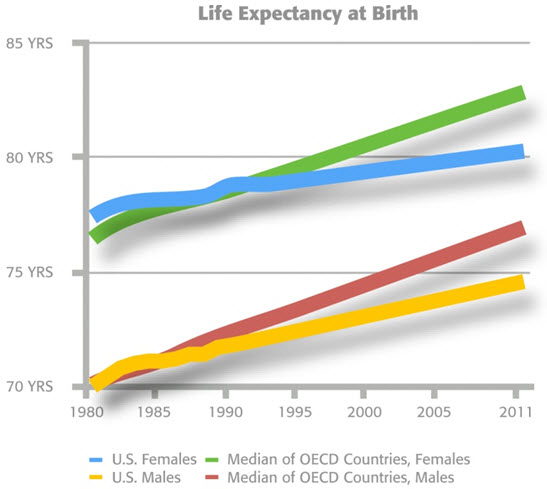
Despite spending all that money, we don’t have the highest quality health system.Americans only receive about 55–70% of recommended care they need,4,5and huge disparities exist in health outcomes by insurance status, race, income,and location.6 Life expectancy is rising, but not as fast as in other industrialized countries. The U.S. ranks poorly for infant and maternal mortality, preventive care, and chronic disease care. On the bright side, we’re near the front of the pack in cancer care, medical research and education, and diagnostic imaging.3

Img5Organisation for Economic Co-operation and Development, “Health Statistics 2013,” June 2013. Img6Organisation for Economic Co-operation and Development, “Health Statistics 2011,” June 2011. Note: Data from 2009, or nearest year. 

Img7

Organisation for Economic Co-operation and Development,“Health Statistics 2013,” June 2013.Other Countries noted here include:Australia, Austria, Belgium, Canada, Chile,Czech Rep., Denmark, Finland, France,Germany, Greece, Iceland, Ireland, Israel,Italy, Japan, Korea, Luxembourg, Netherlands,New Zealand, Norway, Poland, Portugal,Slovak Rep., Slovenia, Spain, Sweden,Switzerland, United Kingdom. Data for Japan and Australia refers to 2008.Note: Values in U.S. $ Purchasing Power Parity.

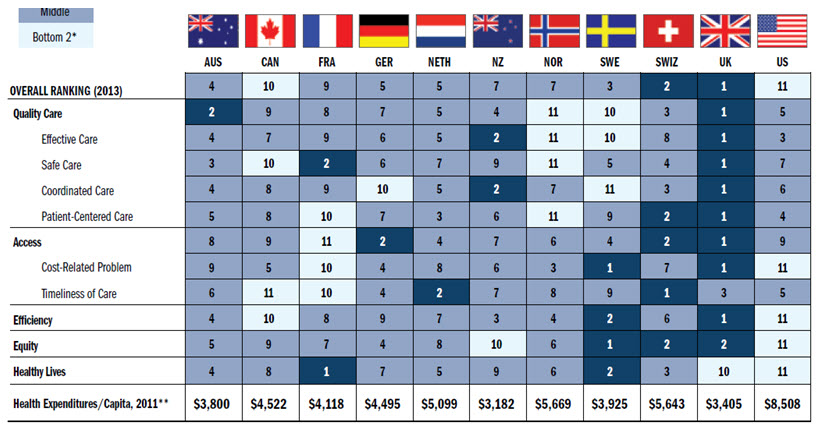
Any way you slice it, the U.S. health care system is in trouble. The most recent major international comparison by the Commonwealth Fund ranked our system 11th—which isn’t so bad until you realize that the study only included eleven countries.

Img8

Davis, et al., “Mirror, Mirror on the Wall, 2014 Update: How the U.S. Health Care System Compares Internationally,”The Commonwealth Fund,June 2010. Used with permission.

1 NHE Fact Sheet. www.cms.gov/Research-Statistics-Data-and-Systems/Statistics-Trendsand Reports/NationalHealthExpendData/NHE-Fact-Sheet.html. Accessed July 8, 2014.

2 Moses H, Matheson D, et al. The Anatomy of Health Care in the United States. JAMA: The Journal of the American Medical Association. 2013;310(18):1947-1964.

3 David S. The U.S. Health System in Perspective: A Comparison of Twelve Industrialized Nations. www.commonwealthfund.org/~/media/Files/Publications/Issue%20Brief/2011/Jul/1532_Squires_US_hlt_sys_comparison_12_nations_intl_brief_v2.pdf. Accessed July 21, 2014.

4 2012 National Healthcare Quality Report. www.ahrq.gov/research/findings/nhqrdr/nhqr12. Accessed July 21, 2014.

5 Asch SM, Kerr EA, et al. Who Is at Greatest Risk for Receiving Poor-Quality Health Care? New England Journal of Medicine. 2006;354(11):1147-1156.

6 2012 National Healthcare Disparities Report.nhqrnet.ahrq.gov/inhqrdr/reports/nhdr. Accessed July 21, 2014.

Friday, December 25, 2015

God bless you

God bless you: Interjection used especially when someone has sneezed. In this situation, "God bless you" is more or less equivalent to saying "Gesundheit."

In German "Gesundheit" means "health" (and "sanity"). Wishing "good health" was once thought to hold off the illness that might follow a sneeze.

"God bless you" came into usage to prevent the escape of the soul from the body, which was thought to occur with a sneeze. (Soullessness was believed to cause ill health.)


MedTerms (TM) is the Medical Dictionary of MedicineNet.com.
We Bring Doctors' Knowledge To You

Thursday, December 24, 2015

Gallstones

Gallstones: Stones that form when substances in the bile harden. Gallstones can be as small as a grain of sand or as large as a golf ball. There can be just one large stone, hundreds of tiny stones, or any combination.

Gallstones can block the normal flow of bile if they lodge in any of the ducts that carry bile from the liver to the small intestine. That includes the hepatic ducts, which carry bile out of the liver; the cystic duct, which takes bile to and from the gallbladder; and the common bile duct, which takes bile from the cystic and hepatic ducts to the small intestine. Bile trapped in these ducts can cause inflammation in the gallbladder, the ducts, or, rarely, the liver. Other ducts open into the common bile duct, including the pancreatic duct, which carries digestive enzymes out of the pancreas. If a gallstone blocks the opening to that duct, digestive enzymes can become trapped in the pancreas and cause an extremely painful inflammation called gallstone pancreatitis. If any of these ducts remain blocked for a significant period of time, severe damage or infections can occur, affecting the gallbladder, liver, or pancreas.

Gallstone attacks often occur after eating a meal, especially a fatty one. Symptoms can include pain for up to several hours in the upper, back, or under the right shoulder together with nausea, vomiting, abdominal bloating or indigestion. These symptoms can mimic those of other problems, including heart attack, so accurate diagnosis is important.

Illustration of Gallstones forming in the Gallbladder

There are two types of gallstones -- cholesterol stones and pigment stones. Cholesterol stones account for about 80 percent of gallstones in N. America and Europe. Pigment stones have a high content of bilirubin (a colored pigment) and account for over 90 percent of gallstones in Asia. Gallstones are more common among women, Native Americans, Mexican Americans, and people who are overweight.

Laparoscopic surgery to remove the gallbladder is the most common treatment. The surgery is called cholecystectomy. Open surgery is done if there are obstacles to laparoscopy. The gallbladder is a dispensable organ. Without it, the bile flows directly into the small intestine, instead of being stored in the gallbladder.


MedTerms (TM) is the Medical Dictionary of MedicineNet.com.
We Bring Doctors' Knowledge To You

CMS Releases Draft 2017 Letter To Issuers In The Federally Facilitated Marketplaces

Tim-ACA-slide

Implementing Health Reform. On December 23, 2017, the Centers for Medicare and Medicaid Services (CMS) released its draft 2017 Letter to Issuers in the Federally Facilitated Marketplaces (FFMs). CMS also released a draft bulletin on the timing of rate filing submissions and rate filings for January 1, 2017 non-grandfathered individual and small group plans and a table of key dates for qualified health plan (QHP) certification, rate review, risk adjustment, and reinsurance for 2017.

The Draft Letter To Issuers

CMS issues a draft letter to FFM insurers (the “draft letter”) late each year following the release of its proposed benefit and payment parameters rule (the “proposed payment rule”). The letter to issuers is finalized early the following year, and it governs health plans in the federal marketplace for the next year, in this case 2017. This provides guidance for insurers as they formulate their health plans offerings.

Much of the letter to issuers is process oriented; it tells insurers what information they have to file where and when. Other sections of the letter largely repeat information found in the 2016 or 2015 letters to issuers as the operation of the marketplaces become more and more routine. But other sections of the letter lay out in greater detail new initiatives identified in the payment rule. In the case of the 2017 letter, provisions on network adequacy, discriminatory benefit design, and formulary review are of particular interest.

Application Of The Letter

The letter applies to insurers that offer qualified health plans (QHPs) and standalone dental plans (SADPs) in the FFM and federally facilitated Small Business Health Options Program (SHOP) exchange. It applies (although with some differences) in all states that use the FFM platform, including states in which the federal government enforces the Affordable Care Act directly; states in which the state enforces general ACA provisions but the federal government performs all marketplace functions; plan-management FFM states in which the state performs plan management functions and makes plan certification recommendations to CMS; and states in which the state-based marketplace uses the FFM platform for eligibility and enrollment functions.

In states other than direct enforcement states, CMS relies on state review of policy forms and rate filings for determining compliance with market-wide standards. States with effective rate review programs also bear primary responsibility for reviewing rates, while states with plan management authority must make timely recommendations as to QHP certification. Multistate plan insurers must also be approved by the Office of Personnel Management. The FFM will only offer QHPs and SADPs and will not display ancillary insurance products or plans that are not QHPs.

Qualified Health Plan Certification And Rate Filing Calendar

QHP insurers must submit applications and rate filings for 2017 certification between April 11 and May 11, 2016. Applications will not be accepted after this date. Information on rate filings must be posted on the website of a state with an effective rate review program and on the federal rate review website by May 25, 2016. CMS begins an exchange of correction notices and revised data with insurers on June 15. Final submission of all QHP data and permitted changes are due to CMS on August 23. After this date, insurers are only permitted to make limited data corrections.

States will send their final plan recommendations to CMS by September 9 and CMS will send certification notices to insurers on September 15 or 16 confirming all approved plans. Insurers must then submit signed certification agreements to CMS.

Final rates for 2017 will be posted no later than November 1, 2016, when open enrollment will begin. States can post rates earlier with 30 days notice to CMS and states with state-based exchanges can post proposed rates as late as August 31. The letter describes in detail how exchanges of information are to be handled. Insurers who miss deadlines or file inaccurate information can have their applications denied.

Insurers that seek recertification of 2016 plans for 2017 must follow the same process as is prescribed for new plans. Insurers must for 2017 (as they did for 2016) submit a crosswalk of their 2016 and 2017 QHPs and SADPs to help the FFM passively reenroll 2016 enrollees into similar plans if they do not return to the marketplace to actively reenroll for 2017.

Standardized Plans

CMS notes in the draft letter that it has proposed standardized plan options for 2017 in the proposed payment rule. CMS states that if this proposal is finalized, insurers would have the option of offering plans that have standardized in-network deductibles, cost-sharing limits, and copayments and coinsurance amounts for a key set of essential health benefits, as well as four tiers of drug benefits. If the proposal is finalized, QHP insurers would be “strongly encouraged,” although not required, to offer at least a standardized silver plan (including silver plan variations for cost-sharing reductions).

The draft letter provides that insurers may offer more than one standardized plan at a level of coverage if the plans are meaningfully different. It observes that an insurer could offer additional standardized plans with extra benefits or with varying networks or other features. This seems to allow more variation in standardized plans than the proposed payment rule did and raises the question as to how much standardized plans can vary and still be called standardized.

QHP Certification Requirements

To be qualified for certification, QHPs must be licensed and in good standing — that is, without outstanding state sanctions. QHPs must have a service area that covers at least a county, or group of counties, unless the FFM concludes that a smaller service area is necessary, nondiscriminatory, and in the best interest of marketplace enrollees.

Network Adequacy

The draft letter contains long and detailed provisions developing the network adequacy proposals made in the proposed payment rule. These will, of course, only go into effect if the payment rule is finalized as proposed.

Under the proposed payment rule, QHPs must meet quantifiable network adequacy standards. These can either be time and distance standards or minimum provider-to-covered person ratios for high utilization specialties. The FFM will rely on state network adequacy reviews in states that apply acceptable quantifiable standards. The draft letter acknowledges that the National Association of Insurance Commissioners has just completed drafting a network adequacy model act (which does not require quantifiable standards) and that state network adequacy standards are currently in flux. CMS will review state standards and release a list of states that have acceptable quantifiable standards on which the FFM can rely.

In states that do not have acceptable quantifiable standards, federal default standards, similar to those applied to Medicare Advantage plans, would apply. Under these default standards, QHP insurers would be required to ensure that a certain percentage of potential enrollees residing in a county have access to a minimum number of providers or facilities of certain types within established time and distance standards and that insurers have available specific minimum numbers of providers and facilities within specific geographic parameters.

Standards are provided for 14 specialties and facilities, such as endocrinology, mental health, pediatrics, hospitals, and inpatient psychiatric facilities. For each specialty or facility, standards are provided in terms of both minutes travel time and miles distance from a provider, which must apply to at least 90 percent of enrollees for five different locality categories ranging from metropolitan areas to CEACs (counties with extreme access considerations).

Thus an insurer would have to ensure that 90 percent of its enrollees were within 30 minutes or 15 miles of a gynecologist in a metro area and 90 minutes or 75 miles in a rural area. Insurers that cannot meet these default standards, or approved state quantifiable standards, because of local circumstances may submit a justification for their inability to meet the standard. CMS expects that insurers will be able to meet the standards at least 90 percent of the time and will not need to submit justifications more than 10 percent of the time.

The draft letter, like the proposed payment rule, provides that insurers should give regular patients at least 30 days notice of termination of provider. Patients in active treatment for life-threatening or serious acute conditions or in their second or third trimester of pregnancy, or for whom a treating physician attests that discontinuance of treatment by the provider would worsen the condition or interfere with anticipated outcomes, must be allowed to continue treatment by terminated providers for up to 90 days or until the treatment is complete.

The draft letter provides greater detail on CMS’s intended development of a network breadth label to guide shoppers on healthcare.gov, first mentioned in the proposed payment rule. This measure would focus on adult primary care, pediatric primary care, and hospitals, with separate classifications as to each as well as a composite classification. The classifications would be calculated by comparing the total number of providers available in each of the classifications in a plan’s network to the total number of that classification of providers available in all QHPs in a county. This number would be called the Provider Participation Rate, or PPR.

All networks within a standard deviation of the median PPR would be labeled as standard. Networks with a PPR more than a standard deviation above the mean would be labeled “broad” and those with a PPR more than a standard deviation below the mean would be labeled “narrow.” Based on 2016 data, CMS believes about 68 percent of all plans would be standard, with 16 percent broad and 16 percent narrow.

The draft letter also provides additional detail as to the CMS payment rule proposal for dealing with surprise out-of-network bills. Under this proposal, insurers could give notice to enrollees at least 10 business days before the enrollee received services from an in-network provider that services might be provided during the encounter by an out-of-network provider for which the insurer would not pay.

If the insurer failed to provide this notice, and essential health benefit services were received from an out-of-network provider (such as an anesthesiologist or pathologist) during the encounter, cost-sharing for the services would count against the plan’s annual in-network limit on cost sharing. The draft letter, like the proposed payment rule, does not clearly state whether this limitation applies to balance billing—charges imposed by an out-of-network provider above the allowed charge offered by the insurer—or whether it simply applies to copayments, coinsurance, or other standard forms of cost sharing. Balance bills can be very costly and the proposal would fail to really address the problem of surprise bills if they are not covered.

Essential Community Providers

The draft letter contains a lengthy section addressing coverage of essential community providers (ECP) — providers that serve low-income and medically underserved individuals. The 2017 ECP standards largely repeat those applied in 2016, although they are tightened a little. In general, insurers must have contracts with 30 percent of available ECPs in their service area, offer contracts in good faith to all Indian health providers in their service area, and offer contracts in good faith to at least one ECP in each of six categories of ECPs (family planning providers, federally qualified health centers, hospitals, Indian health care providers, Ryan White providers, and “other” ECPs). Multiple ECPs located at a single address will only count as one ECP for calculating the 30 percent ratio. Further provisions on contracting with Indian health providers are included later in the draft letter.

CMS will publish a list of ECPs early in 2016, which will include providers that petition to be included on the list and meet certain criteria. Insurers can “write in” providers that they wish to include as ECPs as in prior years, but “write-in” providers will only count toward satisfaction of the 30 percent standard for 2017 if the provider petitions to be listed as an ECP generally no later than August 22, 2016. Insurers that do not meet the 30 percent standard may submit a narrative justification explaining how they adequately meet the needs of their low-income and medically underserved enrollees and how they intend to increase ECP participation in the future. The draft letter describes in detail the information the narrative justification must include.

The draft letter also describes in detail alternative ECP standards that must be met by plans that provide services through employed or contracted medical groups or hospitals, such as staff model HMOs. It also provides that a SADP must offer good faith provider contracts to at least 30 percent of the dental ECPs in its service area and to all available Indian dental health care providers in its service area. As with health insurers, a SADP unable to satisfy the 30 percent requirement may offer a narrative justification meeting specified standards.

Accreditation And Quality Requirements

QHP insurers that will be in their fourth year of FFM participation in 2017 must be accredited based on local performance of their QHPs with respect to nine specific criteria. Insurers in their second and third year of FFM participation must at least be accredited for their commercial or Medicaid products, while insurers in their first year must have at least scheduled or planned to schedule an accreditation review.

QHP insurers must, under the draft letter and the proposed payment rule, verify that hospitals with more than 50 beds with which the insurer contracts have implemented a person-centered discharge program and use a patient safety evaluation system, including a contract with a patient safety organization or an alternative approach described in the letter.

QHP insurers must during 2016 collect and submit validated clinical quality measure data. They must contract with HHS-approved QHP enrollee survey vendors to collect and submit enrollee survey data on their behalf. CMS will use the quality and satisfaction survey data to calculate for the first time, for the 2017 open enrollment period, ratings on a five-star scale for each QHP insurer’s product type; these ratings will be displayed on the marketplace website. QHP insurers may also use their star ratings in their 2017 plan year marketing materials. State-based marketplaces are also required to display QHP quality rating information calculated by CMS for 2017.

Insurers with non-child-only QHP products covering more than 500 enrollees that offered marketplace coverage during 2014 and 2015 must implement a quality improvement strategy (QIS) in line with the QIS technical guidance issued in November of 2015. A QIS offers incentives to providers or enrollees to improve health care quality or outcomes. State Based Marketplaces (SBMs) as well as the FFM must ensure insurer compliance with QIS requirements.

Rate Review

Under the draft letter and the 2017 proposed payment rule, non-grandfathered plans in the individual and small group market must submit to CMS the Unified Rate Review Template for their current plans, even if they propose no rate change or a rate decrease. They must also submit the template for all new plans. Rate increases would be subject to review if the average rate increase for all enrollees, weighted by premium volume for any plan within a product, is 10 percent or more.

CMS does not intend to duplicate rate reviews carried out by states to enforce state law, but apparently will consider whether particular insurers should be excluded from the marketplace based on patterns and practices of unjustified rate increases. Information supporting all proposed rate increases, whether or not subject to review, will be posted on the CMS rate filing website, omitting trade secrets and confidential commercial or financial information.

Discriminatory Benefit Design

The draft letter to insurers contains extensive provisions regarding discriminatory benefit designs. It first clarifies that individuals under age 65 who have end-stage renal disease are not required to sign up for Medicare, and individuals who do not have Medicare Part A or Part B and who are otherwise eligible can sign up for QHP coverage.

Non-grandfathered health plans in the individual and small group market may not discriminate in the provision of essential heath benefits (EHB) on the basis of age, expected length of life, present or predicted disability, degree of medical dependency, quality of life, or other health condition. Age limits may be considered discriminatory if they are applied to EHB services found to be clinically effective at all ages. Discrimination requirements should not be circumvented by labeling a benefit clinically appropriate for adults as a pediatric service. Placing all drugs that cover a specific condition in the highest-cost formulary tier or refusing to cover a single-tablet or extended release drug product without adequate justification might be discriminatory.

Enforcement of the non-discrimination requirement with respect to EHB is largely the responsibility of state regulators. CMS will also, however, conduct cost-sharing outlier analysis of QHPs to identify outliers based on estimated out-of-pocket costs associated with standard treatment protocols; for 2017, this analysis will address bipolar disorder, diabetes, HIV, rheumatoid arthritis, and schizophrenia. CMS will also review plan benefit information, including information in the “exclusions” or “explanations” sections, to identify reductions in generosity of a benefit for some subsets of individuals that are not based on clinical guidelines, medical evidence, and reasonable medical management.

Drug Formularies

CMS will perform several reviews of drug formularies. First, CMS will perform an outlier analysis comparing plan formularies to formularies at both the state and national level to ensure that QHPs meet outlier threshold levels. QHPs that subject an unusually high number of drugs in a class or category to prior authorization or step therapy would be identified as outliers.

Second, CMS will review each QHP’s drug coverage to ensure the availability of drugs to treat—consistent with clinical guidelines—bipolar disorder, breast cancer, diabetes, hepatitis C, HIV, multiple sclerosis, prostate cancer, rheumatoid arthritis, and schizophrenia. It will also review cost-sharing for these drugs to determine whether high cost sharing is being used to discourage enrollees with these conditions. Finally, it will review formularies to identify “adverse tiering” in which drugs to treat certain chronic, high-cost conditions are assigned consistently to high cost-sharing tiers.

Meaningful Difference

Under the draft letter, CMS will continue to review plans to ensure that they are “meaningfully different” to support consumer choice. CMS will first group together plans that are of the same type, child-only-plan offering status, metal level, and service area. Within these groups, CMS will consider plans meaningfully different only if they have:

  • Or do not have an integrated medical and drug maximum-out-of pocket limits,
  • Or do not have an integrated medical and drug deductible,
  • Multiple-in-network tiers instead of one,
  • $200 or more difference in maximum out-of-pocket limits,
  • $100 or more difference in deductibles,
  • A different provider network with a different network ID,
  • Differences in additional benefits that display on the healthcare.gov website, such as acupuncture or bariatric surgery.

Differences in formularies do not qualify as meaningful differences. If a plan is flagged as not meaningfully different, an insurer must modify it or provide a justification to CMS.

Third-Party Payments And Cost-Sharing Reductions

The draft letter notes that insurers offering QHPs or SADPs are required under the 2017 proposed payment rule to accept third-party payments for premiums or cost sharing from federal or state government programs, including Ryan White HIV/AIDs programs and from their grantees or sub-grantees. These payments might in some circumstances be made through an insurer’s downstream entity, such as a pharmacy benefit manager.

(In a related matter, on December 16, 2015, the HHS Office of Inspector General (OIG) issued a modification of an earlier advisory opinion. The modification states that OIG would not impose sanctions on a charity that helps financially needy patients with blood-related cancers with health insurance premiums or cost-sharing obligations if the charity did not 1) limit its funding to specific disease or treatment conditions other than the presence of a widely recognized disease state, 2) limit its assistance to any one drug or manufacturer’s drugs, and 3) limit its assistance to high-cost or specialty drugs. The draft letter does not address premium assistance from charities.)

The draft letter requires QHP insurers to provide plans meeting the standard reduced cost-sharing variations for low-income enrollees. The letter contains guidelines to ensure that reduced cost-sharing plans meet the prescribed actuarial value and maximum out-of-pocket limits, and that they under no circumstances provide less generous coverage than higher cost-sharing plan variations. It also describes the 2017 data integrity tool that plans must use and data integrity reviews CMS will conduct.

Decision Support Tools

Again for 2017, CMS will offer on the marketplace the provider lookup, formulary lookup, and out-of-pocket cost comparison consumer support tools that it premiered in 2015 for 2016 plans. The draft letter sets out the requirements that QHP insurers must meet to make their provider network directories and drug formularies accessible to consumers.

In the FFM, provider directories and formularies must be provided in machine-readable form to facilitate the provision of data for the lookup tools. QHP insurers must also provide the inputs necessary for the out-of-pocket cost calculator. QHP insurers will also be required to meet transparency reporting requirements once these are finalized.

Standalone Dental Plans

Standalone dental plans are only required to meet a subset of the requirements that apply to QHPs and their application requirements are truncated accordingly. The draft letter identifies the requirements that they must meet. In particular, it identifies the requirements that a SADP must meet to be identified as providing adult dental care.

Compliance Issues, Including Agent And Broker Oversight

The draft letter contains a substantial chapter dealing with oversight of QHPs and agents and brokers. CMS will continue to monitor compliance of QHP insurers with program requirements. The draft letter reiterates that the good faith compliance policy that applied during the first two years of the marketplaces ends at the conclusion of 2015, and while CMS will continue to help insurers understand program requirements, good faith is no longer a defense to noncompliance. CMS will conduct risk-based and targeted compliance reviews, which may be desk or on-site reviews.

QHP insurers are responsible for ensuring compliance by their downstream and delegated entities, including agents and brokers. To assist consumers in the FFM and FF-SHOP, agents and brokers must sign general and privacy and security agreements. CMS can terminate these agreements for sufficiently serious noncompliance or material breach. CMS has also proposed in the 2017 payment rule to authorize immediate suspension and subsequent termination for fraud or abusive conduct involving personally identifiable enrollee information.

The draft letter reiterates requirements that apply to web brokers, including oral interpretation requirements in 150 language, language taglines for the web-broker website, and critical documents for the top 15 languages spoken by limited English proficiency individuals in a relevant state, and translation of website content into any non-English language spoken by at least 10 percent of the population of a state. CMS will publish guidance identifying such languages in February of 2016.

The draft letter notes that agents and brokers must be paid the same compensation for the sale of QHPs in the marketplace or similar plans outside the marketplace and describes how similarity of plans will be judged. It also describes how brokers and agents are identified for passive reenrollments and the HHS-approved agent and broker vendor program.

CMS has authority to monitor QHP marketing practices, including ensuring that QHP insurers do not discriminate based on race, color, national origin, disability, age, sex, gender identity, or sexual orientation. Marketing materials and information provided by agents and brokers must also be accurate and not misleading. The use of the terms “exchange” or “marketplace” in websites might be considered misleading.

The Federally Facilitated SHOP

The draft letter examines in some detail how employer and employee renewals and non-renewals and enrollment reconciliations are handled in the FF-SHOP. This information will not be examined here. The letter notes that CMS will not have the operational capacity for 2017 to support calculating premiums based on average enrollee premium amounts. CMS is working on FF-SHOP IT system enhancements. Further information on this is forthcoming.

Consumer Support And Meaningful Access

The draft letter next deals with consumer support and related issues. It describes how “cases” involving consumer issues are handled in the FFM, as well as the responsibilities of QHP insurers for helping to resolve cases. The letter notes that although cases usually involve specific identified consumers, CMS intends to address complaints that it receives about machine readable provider or formulary data on an anonymous basis as the identity of the complaint is not relevant to resolving these issues.

The draft letter addresses meaningful access requirements for non-English speakers established by the 2016 payment rule. These include oral translation in 150 languages. Beginning as of the first day of open enrollment in the individual market for 2017, taglines must be provided on website content and on critical documents indicating the availability of language services in the top 15 languages spoken by people with limited English proficiency in the state. Website content must be translated into languages spoken by at least 10 percent of residents with limited English proficiency.

QHP insurers are required to provide summaries of benefits and coverage compliant with federal requirements. SBCs must include a web address where a copy of the individual coverage policy or group certificate of coverage may be found. QHP SBCs must disclose whether or not the QHP pays for abortions for which federal funding is not available. QHP insurers are required to make SBCs available that accurately reflect each cost-sharing plan variation. CMS is currently working on a revised SBC template that should be available for 2017 plans.

Finally, the draft letter concludes by discussing the responsibilities of the new state-based marketplaces using the FFM for certain functions. While the state-based marketplace retains primary responsibility for enforcing QHP requirements, the FFM can suppress plans in these states that do not comply with program requirements to ensure that consumers only have access to compliant plans.

Risk Adjustment Data Validation

In an unrelated matter, CMS has released at its regtap.info website a timeline and further information regarding its risk adjustment data validation program. During the winter and spring of 2015, individual and small group insurers subject to the risk adjustment program must select an Initial Validation Auditor and submit this entity to CMS for approval. The deadline for submission of 2015 risk adjustment data for validation is April 30, 2016. Through the summer and fall of 2016, CMS will generate a sample of enrollees and their medical claims and the initial validation audit will be completed. In the fall of 2016 and the winter of 2017 a second validation audit will be conducted. In the winter of 2017, pilot results and lessons learned will be released, including 2015 error rates.