Saturday, October 31, 2015

​Key Of A Business

​The Key Components Of A Business Plan


The value of your respective business plan to be the motivational factor managing or starting your corporation can't be underestimated. You may experience that your commitment goes on to build as you collect information, research and write each section.

Your business plan must always accompany requests for Small Business Loans , and lenders or any type of angel investor will simply refuse to think about your business proposal without one.

Lenders and investors wish to see your plan with the purpose of satisfying key questions before they make their decision to grant funding or not.

When you?ve commenced trading your small business plan will act as a steak in the earth, and help you measure where you expected to be against where you really are. It will make you to take corrective action as necessary.

Using sample business plans as along with their structure, along with studying lots of marketing strategy examples as you may comfortably, will give you the necessary framework to consider your corporation from every possible angle.

Starting or running your enterprise without your own business plan is akin to becoming human with no skeleton!

Besides the fact that using a sample structure highlight any areas you haven't fully thought through, however it may also provide you with a good suggestion of what makes a superb marketing strategy, and what doesn't.

Friday, October 30, 2015

Syncope

Syncope: Partial or complete loss of consciousness with interruption of awareness of oneself and ones surroundings. When the loss of consciousness is temporary and there is spontaneous recovery, it is referred to as syncope or, in nonmedical quarters, fainting. Syncope accounts for one in every 30 visits to an emergency room. It is pronounced sin-ko-pea.

Syncope is due to a temporary reduction in blood flow and therefore a shortage of oxygen to the brain. This leads to lightheadedness or a "black out" episode, a loss of consciousness. Temporary impairment of the blood supply to the brain can be caused by heart conditions and by conditions that do not directly involve the heart:

Non-cardiac causes: Syncope is most commonly caused by conditions that do not directly involve the heart. These conditions include:

  • Postural (orthostatic) hypotension: Drop in blood pressure due to changing body position to a more vertical position after lying or sitting;
  • Dehydration causing a decrease in blood volume.
  • Blood pressure medications leading to low blood pressure.
  • Diseases of the nerves to the legs in older people (especially with diabetes or Parkinson's disease) when poor tone of the nerves of the legs draws blood into the legs from the brain.
  • High altitude.
  • Brain stroke or "near-stroke" (transient ischemic attack).
  • A migraine attack.
  • Fainting after certain situations (situational syncope) such as:
    • Blood drawing,
    • Urinating (micturition syncope),
    • Defecating (defecation syncope),
    • Swallowing (swallowing syncope), or
    • Coughing (cough syncope)
    that trigger a reflex of the involuntary nervous system (the vasovagal reaction) that slows the heart and dilates blood vessels in the legs and cause one to feel nausea, sweating, or weakness just before losing fainting.

Cardiac causes: Heart conditions that can cause syncope or fainting due to temporary loss of consciousness include:

To be sure, many of the causes of temporary loss of consciousness can be detected by a careful history. Dizziness after standing up in an older person suggests postural hypotension. Temporary loss of consciousness after urinating, defecating, or coughing suggests situational syncope. Cardiac causes of temporary loss of consciousness such as aortic stenosis or cardiomyopathy are suggested by the occurrence of the event during exercise. Signs of weakness localized to certain areas of the body with temporary loss of consciousness suggest stroke.

The blood pressure and pulse are tested in the lying, sitting, and standing positions. Unequal blood pressures in each arm is a sign of aortic dissection. The heart is examined with a stethoscope to listen for sounds that can indicate valve abnormalities. The nervous system is tested for sensation, reflexes, and motor function to detect conditions of the nerves and brain. An EKG is done to check for abnormal heart rhythms. Other tests may include echocardiograms, rhythm monitoring tests (heart event recorders), and electrophysiologic testing for abnormalities of the heart's electrical system.

When heart conditions are not suspected, tilt-table testing can be used to detect causes of temporary loss of consciousness. Tilt-table testing involves placing the patient on a table with a foot-support. The table is tilted upward and blood pressure and pulse is measured while symptoms are recorded in various positions.

No treatment is needed for many non-cardiac causes of syncope (such as postural hypotension, vasovagal reaction, and situational syncope). The person regains consciousness by simply sitting or lying down. The person is thereafter advised to avoid trigger situations, to not strain while eliminating, to sit when coughing, to lie down for blood drawing, etc.

Older people should have their medications reviewed and caution is advised to slow the process of changing positions from lying to standing. This simple technique can allow the body to adjust to the new position (as the nerves to circulation of the legs adjust slower in older persons).


MedTerms (TM) is the Medical Dictionary of MedicineNet.com.
We Bring Doctors' Knowledge To You

The End of the NHS?

Screen Shot 2015-10-30 at 3.13.19 PM

Britain’s health secretary wants to uncharm his way to a revolution.

To galvanize support for a seven-day National Health Service (NHS), which the NHS was before Jeremy Hunt’s radical plans, and still is, he asserted that thousands die because there is a shortage of senior doctors during weekends. This is an expedient interpretation of a study which showed that mortality was higher in patients admitted on weekends. Hunt ignored the fact that patients admitted on Friday night are actually sicker than those admitted on Wednesday morning.

When logos failed, and after briefly dabbling with pathos, Hunt resorted to ethos. He insinuated that doctors were clock watchers (“service that cranks up on a Monday morning and starts to wind down after lunch on a Friday”). This led to a hashtag on Twitter: #ImInWorkJeremy.

Hunt wants to modernize the NHS. Leaving aside whether modernization is modernization, post-modernization or pre-post-pre-modernization, presumably this endeavor benefits from having doctors on board. How has Hunt enticed the doctors? He prophesized that GP’s diagnostic skills could be obsolete in twenty years. He wanted to replace doctor’s clinical judgment with computers, sooner rather than later (he’d just returned from Silicon Valley).

Karl Marx rallied workers to fight machines and capitalists. Hunt’s approach is of a middle manager with a touch of Mahatma Gandhi. “You suck. The computer will replace you. Do you mind hastening your replacement by embracing the machine, preferably without breaking the screen? Thank you, kindly.”

Junior doctors are leaving the NHS in droves. Many serve Australia’s areas of need, such as Mount Isa in Queensland. This allows homegrown Aussie doctors to stay in Melbourne, and intrepid Aussie doctors to move to Sydney. Britain’s tax payers are subsidizing the Australian healthcare, just as the tax payers from the Indian sub-continent once sustained the NHS.

Hunt, tackling the issue with Kissinger’s diplomacy, offered junior doctors a stick with no sight of a carrot. He wants them to work harder for less pay. In return? There are certain things money can’t buy….

History will unlikely judge Jeremy Hunt as the heir to Machiavelli. To be fair, neither is he the heir to Slytherin. He is Ebenezer Scrooge’s fastidious accountant. He wants the NHS to deliver as much as possible with little investing. He’d be a handy companion if backpacking in Thailand on a shoe string budget. Until he embarrasses you at the Hilton by refusing to pay for the premium scotch.

Hunt is in awe of Virginia Mason hospital, Seattle although I am uncertain he will import their entire business model to the NHS. He wants American healthcare at NHS prices. He dreams globally and pays locally.

Hunt suffers from austeritis – he wants the political gains of austerity without the political losses of austerity. He wants his austerity and not have to eat it. His method, uniquely British Conservative – pay less and demonize the workers – once worked in Stalin’s Soviet Union.

There is a chasm between doctors and Jeremy Hunt. Doctors think Hunt is a pantomime villain. This is unfortunate, not only for pantomime villains. The NHS has different issues today. Britain has changed. When the NHS was born, Brits were resilient, and the Daily Mail did not have an online comment box to vent. There were fewer permutations by which death could be deferred marginally. There was tuberculosis. People were grappling with the harms of smoking. And people were told to eat an apple, not a statin, a day.

Furthermore, the emergency department (ED), or whatever it was called then, wasn’t a one stop shop after Saturday night partying. NHS’s crisis is an ED crisis. The ED crisis is a societal crisis. The crisis has been caused, partly, by four-hour targets, which forced the ED to see patients, regardless of the chronicity or absurdity of their symptoms, as soon as possible.

I once worked in an inner city ED with nurses so good that they gave doctors a run for their money in clinical acumen. The nurses triaged and triaged liberally, making some with long-standing symptoms wait eight hours to be seen, all the while ensuring that streppable myocardial infarction was seen instantly.

The eight-hour wait time persuaded the thirty year old with vague belly pain for six months to see his GP. Everyone in the UK has a GP. Everyone. It is their right. The “right to a GP” has become a “right to a GP at my beck and call”. Hunt wants this right guaranteed at no surcharge.

Breeding unfettered consumerism and social justice creates disingenuous public policies. The public wants 24/7 concierge doctors without forking out the dosh. Who would say no to that? Hunt, instead of confronting this arithmetic delusion with honesty, is fanning it.

NHS is the art of the impossible. If Jeremy Hunt was less patronizing, and gave doctors due credit that they can add and subtract, they will deliver more than the impossible.

Instead he, like those before him, has gone for the jugular. Bringing doctors down a notch won’t modernize the NHS. Hunt’s strategy is penny foolish and pound retarded. If doctors abandon the clinical judgment that Hunt so belittles, austerity will be an imaginary number.

Saurabh Jha is skeptical by nature not because he hates you. He can be reached on Twitter @RogueRad

Genetic Information Safeguards And Wellness Programs; 2016 Marketplace Coverage

Tim-ACA-slide

Implementing Health Reform (October 29 update). On October 30, 2015, the Equal Employment Opportunity Commission (EEOC) released a proposed rule concerning the application of the Genetic Information Nondiscrimination Act (GINA) to employer wellness programs, together with a fact sheet and a series of questions and answers.

Also on October 30 the Assistant Secretary for Planning and Evaluation (ASPE) released a report on Health Plan Choice and Premiums in the 2016 Health Insurance Marketplace. Accompanying the ASPE report, CMS released the public use files on marketplace plans on which the reports are based.

Finally, the Centers for Medicare and Medicaid Services has released the marketplace eligibility notices they are using for 2016.

Applying GINA To Wellness Programs

GINA is a federal law that protects employees from employment discrimination based on their genetic information. It prohibits covered employers (with 15 or more employees) from using genetic information for making employment decisions. It also forbids employers from requesting, requiring, or purchasing genetic information regarding their employees unless one or more of six narrow exceptions applies. It strictly limits the disclosure by employees of genetic information.

Genetic information includes information about the “manifestations of a disease or disorder in family members of an individual.” Family members obviously include spouses.

One of the exceptions to GINA’s information request prohibition applies when an employee voluntarily accepts health services from the employer, including wellness program services. Employer wellness programs often include not only employers but also their spouses. Current EEOC GINA regulations provide that employees cannot be required to provide genetic information as a condition of receiving incentives from their employer. The question thus arises as when wellness programs may legally offer incentives to obtain current or past health information regarding the spouses of employees. This proposed rule addresses this question.

Wellness programs are currently very popular among employers. According to the recent Kaiser Family Foundation Survey, 72 percent of employers with 5,000 or more employees offer or require employees to complete a health risk assessment while 65 percent have biometric screening programs. When incentives are offered for participation in wellness programs or penalties imposed for nonparticipation, serious issues arise under a number of federal laws, including the Affordable Care Act and the Health Insurance Portability and Affordability Act (HIPAA), which prohibit health status discrimination in the provision of health plan coverage; the Americans with Disabilities Act; and GINA. Wellness program rules under the ACA and HIPPA were published in 2013, while the EEOC proposed rules under the ADA earlier this year.   The proposed GINA rules complete this regulatory effort.

The proposed rule would allow employers to offer limited inducements (financial or in-kind and in the form of rewards or penalties) to obtain information from the spouses of employees covered by the employer’s group medical plan regarding the spouses’ current or past health status, through a medical questionnaire or examination. Provision of spousal information would be considered “voluntary” even though these inducements were offered. Participation would have to be with written authorization.

As required by the wellness program regulations under other laws, the wellness program would have to be reasonably designed to promote health or prevent disease and not be a subterfuge to violate GINA or be highly suspect. To be reasonably designed, a program would have to offer follow-up information and advice in conjunction with health assessments or examinations; not impose overly burdensome time or cost requirements; and not be unreasonably intrusive.

The total inducements offered for participation of an employee and spouse cannot exceed 30 percent of the total annual cost of plan coverage. The maximum inducement that an employer can offer for an employee’s provision of information on himself or herself is 30 percent of the cost of sole-employee coverage. The maximum inducement that an employer can offer for spousal provision of information is 30 percent of the cost of family coverage minus 30 percent of the cost of sole-employee coverage. Wellness programs are not limited by these apportionment rules if the program does not involve health information and otherwise complies with federal requirements. The GINA rules do not limit requests for medical information, on a voluntary basis without inducements, from an employee’s spouse or children in conjunction with the provision of medical treatments.

An employer’s offer of inducements to obtain health status or genetic information on an employee’s children (biological or non-biological) is not permitted. Health information on an employee’s children is much more likely to reveal prohibited genetic information about the employee than health information about the employee’s spouse and is thus more carefully protected. Also inducements cannot be offered in return for spouses providing genetic information other than health status information, including the results of genetic tests and family genetic information.

Employers can ask questions about genetic information, but must clearly state that those questions need not be answered in order to obtain an inducement. Employers cannot use genetic information as the basis for employment decisions. Employers also cannot offer employees an inducement to waive GINA’s confidentiality requirements or permit the sale of their genetic information.

The EEOC requests comments on a number of related issues, including:

  • Should inducements be equally available if employee’s spouses in lieu of providing medical information provide a doctor’s statement that they are under the care of the doctor and all medical risks are being addressed?
  • Should the proposed authorization requirements only apply to wellness programs offering more than de minimis inducements?
  • What safeguards are necessary to avoid wellness programs simply shifting costs to employees or spouses with health conditions?
  • Are additional protections necessary where employers store medical information electronically?
  • Should programs be prohibited from accessing genetic information from other sources such as claims data or medical records?
  • Are GINA regulations necessary to address employer wellness programs offered outside group health insurance plans?

The proposed GINA rules do not limit the protections offered by other federal laws including HIPAA, the ACA, and the ADA. The proposed GINA rules correspond to the other rules and should give employers assurance that compliance with one set of rules will not cause problems with compliance with the others. The proposed rules do raise a serious question, however, as to whether provision of spousal medical information to a wellness program is “voluntary” when employees can be charged thousands of dollars more for their health coverage if they refuse to provide the information.

2016 Marketplace Coverage

The ASPE report supplements the report that ASPE released on October 28. It offers some of the information, but contains more detail on premiums as well as additional information on plan availability.

The ASPE report covers the 38 states participating in the federally facilitated marketplace (FFM) for 2016, although some of the tables exclude Nevada, Oregon, and Hawaii, which did not participate in the FFM for 2014, and others exclude only Hawaii, which only joined for 2016.

The report states that the national average 2015-2016 increase in the second lowest-cost benchmark silver plan was 7.2 percent. The October 28 report had stated that the average 2015-2016 increase in the second lowest cost silver plan premium was 7.5 percent, but the October 30 report notes that advance premium tax credits (APTC) are actually not necessarily based on the premium of the second lowest-cost silver plan, but rather on the portion of the premium of the second lowest-cost silver plan that is available to a particular consumer that covers the essential health benefits (EHB). Some silver plans apparently cover non EHB services such as adult dental, and in some areas the second lowest-cost premium silver plan may not in fact be the benchmark plan.

Nationally, the average monthly premium for the second lowest-cost silver plan for a 27 year-old before tax credits is $240 for 2016, up from $224 in 2015. Average premiums for 2016 for a 27-year old run from $189 in Arizona to $590 in Alaska. Tax credits average $97 a month for a 27-year old with an income of $25,000 and $464 for a family of four with an income of $464, but range from $486 for the 27 year old and $1,820 for the family in Alaska to $46 for the 27-year old and $278 for the family in Arizona.

As of October 19, 2015, when the report was finalized, there were nearly 240 insurers signed up to participate in the marketplace for 2016, with the totals varying from 1 in Wyoming to 17 in Texas and Ohio. (Insurers have state-specific licenses so multiple insurers owned by the same parent company are counted separately if they are licensed in separate states). On average, there are 6 insurers per state and 3 per county for 2016, the same as in 2015.

As of October 19, 40 insurers had joined the marketplaces for 2016 and 35 had left. Since October 19 a number of insurers (mainly the CO-OPs) have exited the marketplace, but new insurers are scheduled to join the marketplace during the 2016 open enrollment period, so participation remains about what it was for 2015.

During 2016, 88 percent of the population will live in a state with a choice of 3 or more insurers, the level that seems to be necessary for vigorous competition. New entrants also increase competition. Previous ASPE analysis showed that in 42 percent of counties with new entrants, the new insurers offered at least one silver plan with a premium below what would have been the second lowest-cost plan of existing insurers. Experience from 2015, however, shows that lower premiums are not necessarily in the best interests of consumers if they are not sufficient to maintain the solvency of insurers.

Consumers will be able to choose from 50 plans on average in 2016, down from 58 in 2015. The number of available plans per county varies from 13 in Alabama to 88 across the state line in Mississippi. While the national average is down an average of 2 plans per insurer, this may simply indicate that insurers are responding to consumer demand and dropping unpopular plans or plans that are nearly identical to other plans. On average, 19 silver plans per county will be available compared to 22 in 2015.

In 2015, nearly half of consumers selected either the lowest-cost (31 percent) or second lowest-cost (17 percent) plan in their metal level. According to the report, 86 percent of current marketplace enrollees can find a lower premium plan in the same metal level by returning the marketplace to shop. The average consumer who bought a silver plan in 2015 and decides to shop for a better deal in 2016 can save $52 per month, $624 per year.

After applying tax credits, 78 percent of current marketplace enrollees can find a plan for $100 or less per month and 72 percent for $75 or less. After applying credits, 63 percent can find a silver plan for $100 or less and 41 percent for $50 or less. After applying tax credits, 57 percent can find a plan for $75 or less and 66 percent for $100 or less without changing metal level. But only 47 percent of 2015 enrollees will be covered for $100 or less and 36 percent for $75 or less if they do not change plans.

Finally, the report contains a number of tables showing number of insurers and plans and average second lowest-cost plan premiums and average premium tax credit amounts for hypothetical single individuals and families by state and for particular counties.

Along with the ASPE Report, CMS also released the public use files on which it is based. The public use files for 2016 include plan-level data on essential health benefits, coverage limits, and cost sharing; plan level data on maximum out-of-pocket limits, cost sharing, HSA eligibility, formulary ID, and other plan attributes; plan-level data on individual rates; plan-level data on application of rates, such as allowed relationships (spouse, dependents); insurer-level data on service areas; insurer-level data identifying provider network URLs; plan-level data that crosswalks 2016 to 2015 plans; and insurer-level machine-readable plan network and formulary URLs.

2016 Federally Facilitated Marketplace Forms

Finally, 2016 FFM forms and notices are now available, including open enrollment and redetermination notices; eligibility notices; notices requesting additional documentation for citizenship issues and noting the resolution of citizenship issues or the expiration of coverage for failure to resolve these issues; periodic data matching notices sent to individuals enrolled both in marketplace coverage and Medicaid or CHIP; account transfer notices for accounts being transferred between state Medicaid agencies and the marketplace; and the tax form 1095-A cover page.

Thursday, October 29, 2015

Cryptosporidiosis

Cryptosporidiosis: An intestinal infection characterized by diarrhea caused by a microscopic parasite, Cryptosporidium parvum. The parasite lives in the small intestine of humans and animals who pass it in their feces. The parasite is protected by an outer shell that allows it to survive outside the body for long periods of time and makes it resistant to chlorine disinfection. Both the disease and the parasite are popularly known as "Crypto." The disease is also called cryptosporidium enteritis.

Crypto is one of the most common causes of waterborne disease in the world, including the US. It is transmitted by the fecal-oral route. Outbreaks have been traced to different sources such as contaminated water supplies, swimming pools and lakes, and unpasteurized cider. Crypto can infect people of all ages. The disease is usually self-limited and resolves in about 2 weeks although young children and pregnant women are among those who are especially susceptible to dehydration. However, the main danger that Crypto presents is for people with immunodeficiency who are at risk for wasting and malnutrition which can be so severe as to be life-threatening.

The diagnosis of Crypto may be confirmed by testing stool samples for ova and parasites. There is no reliable treatment for the disease. Dehydration should be prevented or treated. The immune system of people with immunodeficiency should, if possible, be strengthened. For persons with AIDS, antiretroviral therapy that improves the immune status also decreases or eliminates the symptoms of Crypto. To prevent Crypto, proper sanitation and hygiene are essential. People who are immunodeficient it is recommended that they boil water for at least 1 minute. Certain water filters can reduce the risk by filtering out Crypto.


MedTerms (TM) is the Medical Dictionary of MedicineNet.com.
We Bring Doctors' Knowledge To You

Chelsea Clinton & US Surgeon General Vivek H. Murthy at Health 2.0 Fall Conference 2015

Screen Shot 2015-10-29 at 5.36.58 PMChelsea Clinton got the 9th Annual Fall Conference on the right foot sharing the numerous successes of the Clinton Foundation including improving school lunches, providing antiretroviral therapy to millions of people living with HIV worldwide, and advancing women’s health.

The 19th U.S. Surgeon General Vivek H. Murthy issued challenges to the tech industry to use innovation to improve the health of the nation by enabling prevention, making healthy choices easier, eliminating health disparities and making health care more collaborative and inclusive of family, caregivers and other sources of social support.

Vanessa leads the marketing team at Health 2.0.

Narrative Matters: Poems By Patients And Consumers

nm_blog_oct 2015

Editor’s note: This spring, Health Affairs held its first ever poetry contest. Three winning poems were published in the journal. We’re also featuring some of our other favorites on the Blog throughout the month of October.

You Are A Job

You forget that you are someone’s job

something they want to hurry away from

a way to pay bills, daycare, college fees

You remember when your butt goes numb

45 minutes of hard plastic pressed in soft flesh

You remember when supper comes late,

tea cup, empty, soup cold, or missing,

no tater tots, no salad, no grapes

each and every day, irksome things you cannot undo

When help disappears and pain is invisible

though sniffed, scrubbed with disinfectant hand gels

you learn to plan many moves ahead,

wrap requests in ribbons, create sequences,

hoard packets of sugar, salt, pepper, dressings,

call for help an hour before the ambulatory

flee your immobile flesh for home.

– Akua Lezli Hope


New Rule For Eating

new rule for eating: eat everything with love

love the dew on the furry stalks of tiny heirloom tomatoes the

explosion of asparagus tips being snapped from the stalk the

astringent intrusion of a carrot stick in the roof of your mouth the vivid

lucidity of orange peel drying in the sun

resist all urges to quibble with salty celery spikes – nibble them tenderly

do not fret over peppers – embrace them all

nuzzle edible flower petals

hold melons in your hands, feel the aromatic, tender weight of them

blush

ripe

suck the marrow of tangerines

lie back

the scent of cucumber caresses your eyelids

squeeze juicy strawberries until they burst between your fingers

lick and feed yourself

pour lemon juice through your hair

your salad, yourself

revel in it

adore it

be at peace

love the parade bringing fruit to your lips

love the food circus and everyone in it

new rule for eating: swoon

-Jean Vignes

Wednesday, October 28, 2015

New ASPE Report Highlights Benefits Of Returning To The Marketplace

Tim-ACA-slide

Implementing Health Reform. On October 28, 2015, the Assistant Secretary for Planning and Evaluation (ASPE) for the Department of Health and Human Services released a report on Decisions Regarding Health Plan Choices in the 2014 and 2015 Marketplaces.

Healthcare.gov opens for enrollment for the 2016 open enrollment period on November 1, 2015. Consumers who were enrolled in a marketplace plan for 2015 can return to the marketplace as of that date and choose a different plan for 2016. (The marketplaces are already available for window shopping.) Individuals who are enrolled in coverage for 2015 and who do not return to the marketplace and select a different plan for 2016 will be reenrolled in the same plan they were enrolled in for 2015 (or a “crosswalk” replacement plan offered by the same insurer.) The message of the ASPE report is that it pays well to return to the marketplace and shop.

Of the 6.4 million individuals enrolled in a plan through the 35 states that used the federally facilitated marketplace (FFM) for both 2014 and 2015, 4.8 million (74 percent) reenrolled for 2015. These 6.4 million enrollees include 1 million enrollees who did not enroll during the 2015 open enrollment period but rather selected a plan during a special enrollment period after the end of the 2015 open enrollment period. Also included are a half million who selected a plan during the 2015 open enrollment but selected a different plan during a special enrollment period during 2015. The report does not fully explain where the 2014 enrollees who left went, but presumably many transferred to Medicaid, Medicare, off-marketplace individual coverage, or employer coverage.

Of the 4.8 million who reenrolled for 2015, 1.5 million (31 percent) switched plans. Of the 3.3 million (69 percent) enrollees who stayed with their 2014 plan or a crosswalk plan, 1.1 million actively reenrolled in the plan while 2.2 million were auto-reenrolled. Plan switching rates are much higher than historical rates in employer-sponsored insurance (2.8 percent), the Federal Employee Health Benefits Program (12 percent), and Medicare Drug Plans (13 percent).

The percentages of 2014 enrollees who returned for 2015 vary significantly from state to state. Forty-four percent of Iowa and 40 percent of Nebraska enrollees did not return, while only 18 percent of Arizona and Wyoming enrollees left. African Americans and individuals with incomes above 400 percent of the federal poverty level were disproportionately likely to leave. The percentages of 2014 enrollees who chose a new plan as opposed to staying with their 2014 plan also varied by state (but not by demography). 37 percent of Nebraska enrollees and 33 percent of Arkansas enrollees chose a new plan, but only 11 percent of Alabama and 13 percent of Arkansas enrollees switched.

Of the 1.5 million 2014 enrollees who switched plans for 2015,

  • 340,000 (23 percent) changed plans within the same metal level and insurer,
  • 570,000 (39 percent) changed insurer but not metal level,
  • 300,000 (20 percent) changed metal level but not insurer, and
  • 260,000 (18 percent) changed metal level and insurer.

Most (69 percent) of 2014 enrollees were enrolled in silver plans. Cost-sharing reduction payments (CSRs) are only available for silver plan enrollees and 85 percent of silver plan enrollees received CSRs. Moreover, the amount of premium tax credits is pegged to the second-lowest cost available silver plan. Over 90 percent of the 2014 silver plan enrollees who remained for 2015 stayed at the silver level. Only two percent of 2014 enrollees were enrolled in catastrophic plans. Almost two-thirds of these (63 percent) did not return for 2015, while 19 percent moved to a higher level of coverage.

Of silver and gold 2014 enrollees (9 percent and 4 percent of all enrollees respectively) about half reenrolled in the same level, a quarter moved to a lower level, and a quarter did not reenroll. Overall, of the 9 percent of enrollees who changed metal level, two thirds moved to a lower metal level category, and one third to a higher metal level.

ASPE estimates that consumers who switched plans but not metal levels in 2015 saved $33 per month—nearly $400 annually—over what they would have paid had they stayed with their 2014 plans for 2015. Consumers who stayed at the same metal level but switched plans and insurers saved $41 per month, about $490 annually. Consumers who switched metal levels may have saved money in premiums by switching, but if they went from a silver plan to a lower-level plan they might have incurred much higher cost sharing without access to CSRs and thus ended up spending more. Premium savings from switching plans within metal levels varied significantly from state to state — from $67 per year in Delaware to $699 per year in Louisiana.

ASPE also modeled the effect of premium competition among plans on consumer choice in 2015. Not surprisingly, consumers are less likely to select a plan if its premium, after the application of premium tax credits, is high relative to the premiums of other plans in the rating area. Consumers are, for example, 24 percent less likely to enroll in a silver plan with a premium 10 percent higher relative to other plans in the area. Price sensitivity increased with plan metal level.

Consumer responsiveness to premium increases (after the application of premium tax credits) also, again not surprisingly, varies depending on whether the premiums of competing plans increase. If a plan increases its premiums by 10 percent and no other plans in the rating area increase their premiums, enrollment drops by 30 percent, but if all other plans increase premiums 10 percent, enrollment in that plan would only drop 4 percent. Because premium tax credits are set based on the premium of the second-lowest cost plan in a rating area, consumer responsiveness will vary not only based on premium changes in the plan in which a consumer is enrolled but also in the changes in the premium of the benchmark plan.

According to the CMS press release accompanying the ASPE report, if all 2015 enrollees switched from their 2015 plan to the lowest-cost plan in the same metal level for 2016, consumers could save an average of $610 annually before tax credits. The total savings to consumers and taxpayers—who pay for the premium tax credits—would exceed $4 billion. More than 80 percent of 2015 marketplace enrollees can find a lower premium plan in the same metal level before tax credits by returning to shop.

Of course, consumer plan selection should depend not only on premiums, but also on other factors such as plan networks, formularies, and cost-sharing structures. New marketplace features may help consumers make plan comparisons based on these factors. Moreover, if every consumer switched to the lowest-cost plan in a metal level, there might be dramatic effects not only on plan premiums but also on market stability. It is clearly in the interest of individual consumers, however, to shop.

Shigella

Shigella: A group of bacteria that can cause infantile gastroenteritis, summer diarrhea of childhood (a common cause of death for children in the mid-19th century), and various forms of dysentery, including epidemic and opportunistic bacillary dysentery.


MedTerms (TM) is the Medical Dictionary of MedicineNet.com.
We Bring Doctors' Knowledge To You

Who Is to Blame for Health Care’s Problems? A Tale of Two Narratives

Jeff GoldsmithWhat to do about the seemingly inexorable rise in health spending has been the central health policy challenge for two generations of health economists and policymakers. In 1965, before Medicare and Medicaid, health spending was about 5.8 percent of GDP. In 2013, it was nearly 18 percent. And GDPquadrupled during this same period.

Over the past 30 years, there are been two warring political narratives explaining health spending growth, with two different culprits and indicated remedies. At their cores, these narratives blame the main actors in the health care drama—patients and physicians—for rising costs.

The Conservative Narrative: The Patient As Culprit

The conservative thesis holds that the demand for health care is unlimited because it has been, historically, a free good for many patients. Moreover, the argument runs, much illness is driven by bad personal health choices — for example, smoking and obesity, and the heart disease and diabetes that follows. Thus, much of our cost problem is actually the patient’s fault.

Since patients have historically paid a relatively small fraction of health costs, the conservative remedy is that patients must have more “skin in the game,” that is, pay more of the cost themselves. If we do this, people will exercise more discipline in their personal health habits, and also “shop” for care when they need to use it, and costs will go down.

Adherents to this explanation point to Joseph Newhouse’s nearly forty-year-old RAND health insurance study which showed that patients who shared some of the cost used a lot less care and were, apparently, no sicker at the end of the study period. The oft-ignored coda to the Rand study was that patients were incapable to distinguishing high-value from no-value care, a finding echoed just last week by a study of patient behavior in a high-deductible health plan.

This thesis — that lifestyle and indiscriminate use of care are the main drivers of heath spending — has led to multiple remedies: health savings accounts; higher cost sharing; higher patient front-end cash payments to doctors and hospitals; and also “price transparency” — attempting to clarify in advance of care what something will cost, so patients can use their own money to shop for care.

The conservative narrative had an influential role in shaping the structure of private coverage under the Affordable Care Act, where very high deductibles and annual out-of-pocket limits are the norm, as well as the Cadillac Tax on so-called “high value” health plans, designed to discourage first dollar coverage. It has led to a quintupling of patients with high deductible plans since 2007. According to the 2015 Kaiser Family Foundation Health Benefits Survey, patient cost sharing has grown six times as fast as wages since 2010.

The Progressive Narrative: The Physician As Culprit

The “progressive” narrative is more convoluted and absolves the patient of blame. The progressives’ culprit is the way we have traditionally paid for care: fee-for-service payment of doctors and per-admission or per-procedure payment of hospitals. Progressives, and many in the health policy community, believe that cost growth is actually driven by doctors and hospitals seeking higher incomes. The piecework incentive encourages hospitals and doctors to over treat or renders care that is completely unnecessary.

Physicians, it has been argued, have target incomes; to reach those targets, they will induce demand for care, e.g. find things to do to us solely to generate income. Reform advocates argue that if we change incentives to doctors and hospitals and compel providers to emphasize prevention and more effective care (paying for “value instead of volume”), costs will fall.

The behaviorist model of physician behavior has led to so-called “value-based payment” and the Physician (PQRS). This model has also now led to MIPS, the payment incentive model embedded in the 2015 Sustainable Growth Rate physician payment fix.

The core belief seems to be that if we can find the right “operant conditioning schedule” (per behavioral psychologist BF Skinner), physicians will do higher value works at lower patient risk. The result has been a regime of “micro-accountability”: astonishing increases in clinician reporting requirements from Medicare and commercial payers, and in the amount of time caregivers spend typing information into the patient’s health record in order to get paid. It has resulted as well in vast consulting and information technology outlays by providers to support new, highly complex payment approaches like the Accountable Care Organization and the Patient Centered Medical Home.

Dissecting The Narratives

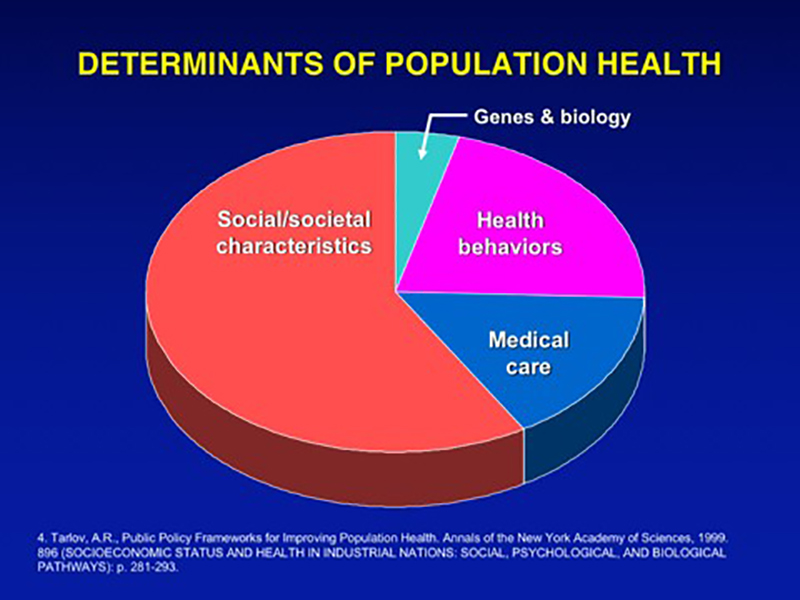
Problems with the conservative perspective: ignoring social factors. There are significant problems with both these narratives. On the conservative side, it is true that some behavioral issues, notably obesity and smoking, have major health cost consequences. As the graphic indicates, however, health behaviors account for a minority of health costs. It is laughable to think that minute or even significant economic incentives to the patient will negate the health effects of social determinants (poverty, lack of education, unemployment, compromised access to care), or of hundreds of billions spent advertising cigarettes, fast food, alcohol, and sugary snacks, or for that matter or of flawed “official” nutritional advice — let alone the accumulating effect of chronic disease as we age.

Exhibit 1Exhibit 1

Reversing these problems is fundamentally a public health and political challenge that requires a multi-faceted approach with a lengthy, uncertain payoff. As we have seen with the sharp fall in adult smoking rates, and more recently, the accelerating decline in soft drink sales, progress is possible even if maddeningly slow to manifest itself.

The US significantly trails most OECD countries (to whose health systems ours is often unfavorably compared) in social spending. There has also been a lagging and inconsistent investment in public health in the US, despite the coverage gains from the Affordable Care Act.

To improve peoples’ health involves not only more consistent public health and social investment, but also a more just society and a more vibrant economy. In other words, improving health requires changing the society itself, not merely changing individual behaviors. There is clearly a piece of avoidable health care demand attached to changeable behaviors, but it is a lot smaller than its advocates believe.

Problems with the progressive approach: the explanatory limits of physician income maximization. On the progressive side, it is inconveniently the case that most of the countries to whom our US system is unfavorably compared (Switzerland, France, Germany, Canada) pay their hospitals and physicians on a piecework basis pretty much the same way we do, albeit with macroeconomic caps on total spending (e.g. global budgets). My spies in these countries tell me that their physicians do tend toward growing their incomes, but within definable, politically enforced limits.

But even inside the US, the “physician income maximization” hypothesis doesn’t explain why we have physician communities as diverse as Grand Rapids, Michigan, the two Portlands (Maine and Oregon), and Richmond, Virginia, where aggregate spending per capita for both Medicare and commercially insured patients is much lower than in most of the sunbelt or the northeast. Medicare’s payment methods are identical in all these places, and yet some physician communities practice a fundamentally more conservative style of medicine.

But most inconveniently of all, the income maximization hypothesis does not explain the sudden and sustained slowdown in spending we’ve experienced since 2008, with health spending growth subsiding to less than 4 percent annually. Health spending hasn’t grown this slowly in 50 years, since before Medicare and Medicaid, and spending has persisted at low levels seven years into an economic recovery.

Exhibit 2Exhibit 2

Though there has been a recent modest uptick in health spending growth, core costs (e.g. hospital and physician services) have continued growing at pre-Medicare levels through 2014 and 2015 according to recent from the Centers for Medicare and Medicaid Services (CMS). The biggest outliers in the recent cost breakout: a single expensive new drug, Sovaldi, and sharp upticks in the cost of government administrative expense and the “net cost of health insurance” — both factors linked to implementing the Affordable Care Act.

The physician income maximization hypothesis also fails to explain the loss of 200 million physician visits since 2009, according to IMS Health. Did the irresistible lure of an open cash register suddenly end in 2009? Or, are other, more powerful forces at work, such as the retirement of activist baby boomer docs or the repricing of health services to the consumer due to the growth in high deductible plans? Only time and research inquiry will enable us to understand the reasons.

Progressives not only overestimate the effect of incentives on professional behavior. They also overestimate the capacity of the health system to improve the health of the population. Health care providers have negligible leverage to influence the social determinants of health or to significantly delay the onset of age-related chronic illnesses. Even with superb primary care infrastructure, the care system is a blunt instrument in improving the public health.

Health systems spend tens of billions every year in community benefit activities, many of which are targeted at community education, screening for controllable chronic diseases like heart disease and diabetes, sponsoring wellness activities that target increasing physical activity and improved nutrition, etc. This is all to the good.

But as long as health systems’ asset base and the bulk of their professional activities are devoted to caring for the sick and injured, acute care and mitigation of patient suffering will legitimately remain their core business.

Most care givers will never care as much for patients they are not seeing as the patients in front of them. Their fundamental moral and social obligation is to those immediately at risk for death or serious systemic injuries who have nowhere else to turn than the care system. Being complaint driven, the care system is inherently reactionary, as is any safety net.

Transcending The Two Narratives 

On the other hand, there are big and reachable savings to be had for society and big benefits for their patients by eliminating wasteful use of resources when people do become ill, as well as by eliminating the iatrogenic causes of illness through improved safety and protocol-driven care. Health systems are striving to make more thoughtful use of the professionals who make up their operating core, by empowering them to continuously improve the care process. Care driven by evidence-based protocols, rather than inspired professional improvisation, can only help.

In the meantime, the twin demeaning narratives of moral failure—by individual patients according to conservatives and by caregivers according to progressives—continues to animate health policy and drive us toward simplistic marginalist economics solutions that reduce physicians and patients to merely economic actors.

The real story of what creates health and drives health spending is far more complex than these cartoon narratives suggest.

We need a more complex and balanced explanation of what creates health, and a more comprehensive set of solutions that implicate public health and the human services, as well as individual citizens and the care system. The care system by itself cannot improve Americans’ health.

Jeff Goldsmith, Ph.D., is the president of Health Futures Inc. and associate professor of public health sciences at the University of Virginia, Charlottesville. 

Budget Legislation Would Repeal Auto-Enrollment Requirement For Large Employers

Tim-ACA-slide

Implementing Health Reform. On October 27, 2015, the provisions of the proposed Bipartisan Budget Act of 2015 became publicly available. If adopted, this legislation would, among other things, increase caps on discretionary spending for 2016 and 2017, which could free up spending for Affordable Care Act (ACA) implementation.

It is proceeding on a separate track from the Budget Reconciliation Act, which is directed at mandatory spending and taxes and will certainly be vetoed if adopted by the Senate. It also does not itself appropriate funding for government agencies, and thus does not preclude further attempts at limiting expenditures for ACA implementation in appropriations bills that will follow.

Only one provision of the Bipartisan Budget Act is directly relevant to the Affordable Care Act. That provision repeals section 1511 of the ACA, which requires employers that offer health insurance and that employ more than 200 employees to automatically enroll new employees in a health plan, subject to any legal waiting periods. Section 1511 further requires employers to give employees notice that they can opt out of the plans in which they are auto-enrolled in at any time. This is a “nudge” provision, intended to reverse the course of inertia and encourage enrollment in coverage by employees who might otherwise forgo doing so if they had to initiate enrollment on their own.

Implementing the provision, which has been generally opposed by business interests, has been a very low priority for the administration, and its repeal will not seriously affect the general scheme of the ACA. The Department of Labor (DOL) announced in late 2010 that it read the provision as not taking effect until it issued implementing regulations and that it did not intend to do so until 2014. In a second guidance issued in 2012, DOL stated that it would not be ready to implement the provision by 2014 given the need to coordinate implementation of the provision with other more important provisions such as the employer mandate and the ban on waiting periods exceeding 90 days. It projected no deadline for implementing the provision. DOL reiterated that employers did not need to comply with the provision until it issued rules.

Repeal of the provision is also included in the budget reconciliation bill recently passed by the House. The Congressional Budget Office (CBO) projects that repeal of this provision would reduce the number of people covered by employer-sponsored insurance by 750,000 beginning in 2017 when the provision might first be enforced, and that 90 percent of these people would remain uninsured. Repeal would reduce the budget deficit by $7.9 billion over the 2016-2025 period because employees would receive more taxable income rather than health benefits, which are not taxable, and because of increased individual responsibility penalty payments.

Defining Interoperability: An Interview with Grahame Grieve

flying cadeuciiGrahame Grieve is a long-time leader within HL7 and one of the key drivers behind FHIR. He chats with Leonard Kish about what’s been happening and what’s ahead for interoperability.

LK: First tell me how you got into standards… it’s kind of an odd business to get into.  Why have you chosen this and why are you excited about it?

G: It happened by accident.  I was working for a vendor and we were tasked with getting some exchanges and I wanted them to be right the first time.  That was the philosophy of the vendor.  If we did it right the first time, then we wouldn’t have to keep revisiting and that meant that using the standards correctly.  The more I got involved, the more I discovered that it wasn’t obvious how to do that…and that the standards themselves weren’t good.  I felt personally that we need really good standards in healthcare.  So it became a personal mission and I got more involved through the company I was working for and eventually I left so I could continue doing what I wanted doing with the standards – I enjoy the community aspect of the standards and feel very strongly that it’s worth investing time in and I had the opportunity to build a business out of it, which not many people do. So now I freelance in standards development and standards implementation.

LK: There’s a lot of talk in congress about the lack of interoperability and everyone probably has their own definition. Do you have a working definition of interoperability or is there a good definition you like for interoperability?

G: The IEEE definition to get data from one place to another and use it correctly is pretty widely used.  I guess when you’re living and breathing interoperability you’re kind of beyond asking about definitions.

LK: Are there ways to measure it then?  Some people talk about different levels; data interoperability, functional interoperability, semantic interoperability.  Are there different levels and are there different ways to measure interoperability?

G: We don’t have really have enough metrics.  It’s actually relatively easy to move data around.  What you’ve got to do is consider the costs of moving it, the fragility of the solution, and whether the solution meets the user’s needs around appropriateness, availability, security, and consent.  Given the complexity of healthcare and business policy, it’s pretty hard to get a handle on those things.  One thing that is key is that interoperability of data is neither here nor there in the end because if providers continue with their current work practices, the availability of data is basically irrelevant, because they treat themselves as an island. They don’t know how depend on each other.  So I think the big open area is clinical interoperability.

LK: Interoperability in other verticals mostly works.  We hear talk about Silicon Valley and open APIs.  There’s perhaps less commotion about standards, maybe because there are less conflicting business interests than in healthcare.  Why is healthcare different?

G: First of all – from an international perspective, I don’t think other countries are by and large better off or different (where incentives are different).  They all have the same issues and even though they don’t have the business competition or the funding insanity that you do in the US, they still have the same fundamental problems.  So I hear a lot of stuff from the US media about that and I think it’s overblown.  The problem is more around micro level transactions and motivations for them and fundamentally the same problem around getting people to provide integrated clinical care when the system works against them doing that.                  

LK:  So can you give me an example of how things are maybe the same with NHS or another country vs. the US in terms of people not wanting to exchange clinical data?

G: In Australia, there’s a properly funded medical health care system where the system is overwhelmed by the volume of work to be provided.  No one get’s any business benefit from not sharing content with other people. Still, because you have to invest time up ahead to exchange data and other people get the benefits later, there’s very low participation rates for any kind of voluntary data sharing schemes that you set up. There’s scandalously low adoption rates.  And that’s not because it’s not a good business idea to get involved but it’s because the incentives are misaligned at the individual level (and the costs are up front).

LK: Right, so it’s maybe it’s also a lack of consumer drive?  It’s there data and you’d expect the incentives to align behind them, but they don’t ask and don’t get, maybe because we (or our providers) only access your record when we really need them.  It’s not like banking or email or other things we use on a daily basis?    

G: Probably that’s part of it, but from a consumer’s point of view, what does it do for them getting access to their data?  

If they can’t share their data with other clinicians and other clinicians use the shared data effectively, then it’s not that significant.  And that’s where the challenges are in getting clinicians to start thinking of care in an integrated framework. One of the things we’ve got going running here in this country is disease focused clinics.  So there’s a breast cancer clinic, and if you’re diagnosed with breast cancer they get you in and in one day they do all the scans and all the consults and everything.  If you don’t get involved with one of those, and there’s only a few of them in the country, then you have to schedule each of those things separately and it can take you months to go through the process instead of hours.  And all it is is a combined coherent scheduling problem.  We’ve almost got the ability to integrate scheduling systems really tightly.  It’s a scandal.  This happened to a friend of mine.  There were weeks between each appointment.  It’s a disgrace.

LK:  Any idea how that kind of stuff is going to get fixed, as standards come and go?

G;  I think of standards as a precondition.  If they can exchange data correctly then they can start asking themselves whether they want to.  Whereas if they can’t exchange data correctly and usefully then they don’t even get to ask the questions.  So standards is just a precondition to asking “How do we have patient focused care without having to build specific institutions around a particular process?”                  
                  
LK: So let’s move on to FHIR.  You’ve worked with HL7 a long time and now have brought FHIR forward.  Has it been kind of an easier process?

G: In some ways it’s easier  The process we’ve set up relies very heavily on social media and existing internet development infrastructure in order to be transparent and open.  We inherit very much from the open source movement.  And that kind of has always been the ethos of HL7 as well, but HL7 was established before those things.  So there’s a legacy way of operating that’s not optimal and it’s a matter of gradually moving the working organization to a new set of processes and technologies based on collaborative media that have come out of the webspace.

LK: When you say the process uses social media, you’re referring to a kind of internal social media. You don’t mean Twitter and Facebook right?

G: Well we use Twitter, we use Wiki, we use Skype extensively, we use blogs.  Some of the less high profile areas of social media.  Although we do use LinkedIn for notifications and there’s often discussion in the LinkedIn groups around FHIR.  But probably Wiki is the one we use the most.

LK: Tell me about Version 2 of FHIR.  What’s in it?

G:  Technically we made 1500 changes to the spec, some of them pretty sweeping.  So it was very much a thorough overhaul.  What I’ll do is I’ll forward you the press release which is not yet finalized but should be finalized by the time we finish this call.  It has the best summary around.  

Note: you can find the (.pdf) Version 2 Press Release here:

LK: So it’s more of an update, there’s not expanded resources?

G: Yes there’s a bunch of new resources around clinical, administrative and financial stuff.  The financial stuff is still pretty preliminary.  And we’ve explored some clinical areas where there’s never been interoperability before so we’ll have to see how that goes.

LK: Can you tell us a little bit about how SMART On FHIR enhances FHIR and are there going to be other things on FHIR as we go forward with different enabling bodies working together?

G: FHIR is a base API for all sorts of usages.  One of the most common usages is going to be exchanging healthcare information between EHR’s and within an EHR in its internal extensibility environment.  And that’s where SMART On FHIR fits in and provides a really neat solution for what EHR’s need to do.  So personally I think most data exchange using FHIR will use SMART on FHIR because the driving need is in the EHR space.  And I think Smart On FHIR is a great extension to FHIR around that.  I think there’ll be other extensions that are more in the corporate backbone space and more knowledge-based service, things that are not so user specific. Those aren’t formed yet and SMART On FHIR is the one we’re throwing all our weight behind because it meets the immediate needs.

LK: What about Argonaut fit into this?

G: Argonaut is a supporting movement.  It’s a volunteer organization.  It was not obvious originally that the FHIR project would keep to its self-described deadlines (for adoption). We had people going “I don’t know if we’re going to make it, there’s big pieces of work that we probably don’t have time to do.”  And the big EHR vendors said “No we don’t want that to slide, what can we do about that?” So they did two things that we talked about.  First, they funded specifically a piece of work that wouldn’t otherwise have happened that was a precondition for us, and then they banded together to drive adoption of the standard, both as a quality measure for the standard itself and also as a way of encouraging ONC to adopt the standard earlier.  They are working with HL7 and ONC to clarify further the appropriate way to use FHIR in the USA because there are some parts of FHIR that are very international in perspective.  For instance, because there is no consistency around the world with how medication is encoded, we don’t make any rules in FHIR about how medication is encoded.  But clearly in the US context, you want to agree about how the medication is encoded.  So we’re working through all those issues like that in association with with the Argonaut members.

LK:  Right and you said that most of the big EHR vendors were pushing for deadlines not to slip so presumably most vendors were in favor of FHIR and seeing it go forward.  Do you feel like kind of the religion around the big EHR vendors has changed around interoperability in the last few years?

G: I don’t do that much work in the implementation space for EHR’s in the States.  So I don’t work with the operational EHR’s, I work with the development teams.  And from where I sit, they’re all under instructions to make interoperability happen.  They’re all believers.  Maybe it’s a time to market thing since initiating is going to take seven to ten years to come to fruition, and maybe in that time frame the market chatter will change.  Because as far as I can see, the vendors believe in data exchange.  As a vendor myself, we rapidly saw that holding on to the data in order to protect a business relationship effectively equated to reducing your service to your customer in order to make the customer happy.  Well that’s crap.  Everyone at the IT level is behind interoperability because we’ve been shown it’s a better way to build systems.  But as I said the business/clinical people are not yet converts to the cause.

LK: You hear things about different sales teams pushing independent providers onto a single system and things like that.  That’s a different part of the organization.  But to your point, I think developers want to see things happen and it’s great to hear that they’re under orders to make it happen.  It’s refreshing actually.  

G:  Well that’s what I see.  It might be that they want to have the capability but they might not roll it out with the certainty with which they have developed it.  But most certainly they’re saying “Oh I want to develop the capabilities.”

LK: Anybody can use FHIR right?  Do you have a sense of scale as to how fast adoption is going with FHIR, and how consumer-generated data might fit in?

G: They have some production usage in integrating disparate healthcare systems around the world, EHRs in late preparation to go live, integration systems (for instance, the Commonwell patient integration system is based on an early version of FHIR).  Adoption is running way ahead of where we thought it would be for what was effectively an alpha release.  Today’s release is kind of beta and we’ll get a lot of adoptions.  

There isn’t a lot of production adoption in patient collected data yet.  With very patient focused content, the question is going to become: “The standard is complex, more complex than rolling your own, so why shouldn’t you roll your own?”  And there’s a bunch of reasons the standards are more complicated because we cater to more use cases.  For example, a simple BMI is based on height and weight.  So you could do an API based on height and weight.  But there’s a bunch of particular populations for which that is not appropriate.  Amputees are a great example.  You get an amputation and my formula is no longer appropriate for you. (Standards around patient data) becomes in the end a human rights issue.  If you’re going to offer a patient focused service but your API makes assumptions about not catering for particular minority populations, and there’s going to be different kinds of minority populations than the ones traditionally focused on, in essence they’ll be clinically handicapped and that will become a human rights issue.  And I predict that there will be quite a lot of focus on this issue 2-3 years from now when social health services are really ramping up and a significant population of patients are finding they can’t use the services because they don’t meet the simplifications people have assumed they could get away with making.

LK:  So, what’s next?

G: Well we regard this as a beta now so we have a huge amount of implementation work to do with Argonaut and other partners around the world.  We know specifically that there’s a couple big areas that we haven’t got a solution.  One of those is the workflow process of ordering and asking other people to do things and having people be able to refuse to do them and recommended alternative actions.  So there’s a bunch of work to do around capturing that workflow and making that pretty easy because people vary widely about those things.  We’ve certainly got a pile of work to do around clinical decision support.  Those are our big agendas for the next little while and they certainly will keep our plates full.       


The Writing Is On the (Healthcare) Wall

flying cadeuciiFor the past few months I have been traveling around the globe. In my travels I have been talking to “leaders” from Ministries’ of Health, Insurance Companies, Hospitals, Physicians, and Professional Societies.

In many of the conversations I continue to hear more of the same story:

In order for change to happen, the incentives need to be in place.

Things such as, “…in order for physicians to adopt, the incentives need to support the actions.”

“…until incentives align it is difficult for hospitals to adopt changes in care models.”

“…in order for me to spend more time with patients the payment models need to align accordingly.”

Repeatedly I hear that in order for people to make changes inside of healthcare,that the money trail needs to lead the charge.

Yes, that worked so well with the adoption of EHR/EMR.

Leaders followed the dollars only to adopt and implement data archives that do not talk, interact, or share knowledge across the care continuum for patients.

Since when do “leaders” follow?

Really?

At what point did leaders take the stance that in order to make a change it has to be easy and the dollars need to exist?

Well the writing is on the wall….

Wall

You can wait for payments, incentives, and the current model to be optimized.  You can wait for the payers of today, insurance and government, to decide on how you will be paid tomorrow. Wait for them to define “value” for you, and the “worth” you provide.

You can be a follower.

I ask why?

Why wait for someone else to define the time, manner, and the change we make?

It takes time, work, and effort in defining the challenge(s).

It takes even more time and effort to understand those definitions.

When you have a deep understanding of those challenges you can leverage them to create a different world view. A new model.

I prefer to lead and create a new model that makes the other models obsolete.

I prefer to learn from the venture capitalists. First in, first out.

Creating and designing a new model is risky. It takes time and effort. It is challenging. It requires me to be comfortable with things that are uncomfortable. It forces me to live on the edges. It pushes me to enjoy the white space.

It makes us ask, “People like us, do things like….”

This is where the incentive exists.

The incentive to be a leader.

Will you lead with me?

Or will you follow?

Andy DeLaO, aka Cancergeek, is a healthcare professional with 15 years of experience leading and developing healthcare service lines, marketing, and challenging the status quo of healthcare delivery to improve connecting patients and the world of healthcare.

Health Risk Continues To Improve In Covered California

Blog_Bertko_CoveredCA

The recent release of risk corridor results by the Centers for Medicare and Medicaid Services (CMS) has highlighted a national issue for health insurers offering coverage in the individual market under the Affordable Care Act (ACA). In many states, some insurers did not project premium rates at sufficient levels to account for the risk of the newly insured population. Thus, there were insufficient risk corridor “payables” available from conservatively-priced plans to cover all risk corridor “receivables” for underpriced plans to compensate for risk corridor-eligible losses.

However, this phenomena is highly state-specific. In contrast to most of the country, Covered California, California’s health insurance exchange, had much greater success enrolling a diverse population and did not have a market that allowed the continuation of low-risk, remaining “transitional” plans once the ACA was implemented. As a result, the health risk scores of enrollees for individual plans in the exchange have stabilized in the second year (regressed to the mean), with risk being more evenly distributed across all of the plans.

At the same time, the overall risk score statewide for enrollees with chronic conditions has decreased, indicating that the 2015 cohort of enrollees is slightly healthier than the 2014 cohort. Understanding a population’s health risk, which is a proxy for anticipated health care costs, is critical to accurately setting the next year’s premiums. As an active purchaser, Covered California used this information to better negotiate 2016 premiums on behalf of Californians.

2016 Premium Growth Is Lower Than 2015

Each of the actuaries from the ten major insurance carriers participating in Covered California in 2015 used the risk score analysis along with claims data to set 2016 premium rates lower than anticipated and lower than the individual market’s historical average. (The exchange added two more health insurers—United Healthcare Group and Oscar—for 2016.) Partly as a result of sharing these analyses with carriers, Covered California’s premiums in 2016 are only increasing by a weighted average of 4.0 percent, which is less than the 2015 weighted premium growth of 4.2 percent. This also benefits the entire individual insurance market, since Covered California’s negotiated rates carry over into off-exchange premiums also.

The health risk findings disprove what many ACA detractors once opined: that health insurance exchanges will not be able to attract healthy enrollees, and the resulting death spiral will increase premiums to unsustainable levels. The ACA is working in California. Other health insurance exchanges can also use a comparative risk score analysis in conjunction with active purchasing tactics to reduce premium increases.

Developing The Risk Scores

An initial study analyzed the risk scores of Covered California’s 2014 enrollee population, finding that risk scores varied considerably by plan but that the overall enrollment group had a relatively low number of people with chronic conditions. Using the same approach, we updated the analysis for the 2015 enrollee cohort with more recent hospital discharge and emergency department data.

Using individual-level unique identifiers, we combined two datasets: data from Covered California’s enrollment system as of May 2014 and April 2015; and, the 2013 data files (the most recent available) from the California Office of Statewide Health Planning and Development (OSHPD ) emergency department and inpatient discharge datasets (a statewide all-payer claims database).

Next, we derived risk scores for each plan based on the individual-level diagnoses contained in the OSHPD datasets, when present, and the age and sex of each enrollee derived from Covered California eligibility data. In calculating these the scores, we applied risk weights developed using the Chronic Illness and Disability Payment System (CDPS) for the Temporary Assistance for Needy Families (TANF) population under California’s Medicaid program (MediCal). This allowed us to better align the derived risk scores with the Covered California population, the majority of whom earn less than 250 percent of the Federal Poverty Level and are non-disabled (similar to a TANF population). For the vast majority of individuals who did not have either a hospitalization or an emergency department visit in 2013, we derived the risk weights based on enrollees’ age and sex only.

As a side note, we used the already-available risk weights from MediCal in our 2014 analysis because of time constraints. To have risk scores available in time for the 2015 premium negotiating sessions, one of the authors had his team from the MediCal program use the available TANF risk adjustment weights, rather than use a longer process to input the more complex Hierarchical Condition Categories risk adjustment system used by the U.S. Department of Health and Human Services. In updating the analysis for 2016 premium negotiations, we continued to use the CDPS/TANF weights to provide consistent results and better year-over-year comparisons.

We then standardized the risk scores by dividing the unadjusted score for each health insurance carrier by the average risk score for Covered California’s entire population. The resulting adjusted risk score normalizes the distribution to 1.00 for the Covered California enrollment (but doesn’t include any off-exchange enrollment), such that scores below 1.00 are relatively lower risk than scores above 1.00. Comparing the normalized risk score of enrollees in each of the ten health insurance carriers allowed us to assess any differences in average risk scores across the carriers. Lastly, we compared the two-year historical trend to evaluate how risk scores changed.

Risk Scores Are Stabilizing And Improving

Figure 1 shows the 2014 and 2015 mean risk scores by carrier. Without exception, every carrier’s population mean risk score moved closer to 1.00 in Covered California’s second year, which is good news for the stability of premiums. It means that the enrollment of each specific carrier is moving towards the statewide average risk, so no carrier appears to be attracting mainly “good risks” or mainly “high risk” individuals. This enrollment pattern is important for Covered California’s long-term stability.

John_Bertko-Bertko-RA_in_CovCA-new_revised_version_10-19-15

Source: Covered California

Additionally, overall hospitalization and emergency department data showed that enrollees had less severe conditions in 2015, compared with 2014. The raw (non-normalized) risk scores for those who were hospitalized decreased by over 9 percent from 2014 to 2015, even though the percent of enrollees who were hospitalized or had an emergency department visit remained stable. (In 2014, 9.2 percent of enrollees had a hospitalization or emergency department visit, compared to 9.3 percent of the 2015 enrollee cohort.)

The hospitalization and emergency department visits and the derived risk scores provide only proxies for an individual’s or a population’s risk, and do not perfectly reflect the actual health risk for each individual enrollee. The risk score analysis is not a crystal ball and will not predict the future, but the approach is rooted in actuarial science and accepted as an important gauge of future health costs.

The leveling off of risk scores across carriers and the overall reduction in hospitalizations and emergency department severity mean that Covered California has enrolled enough people, and enough healthy people, to stabilize premiums and keep premium growth within reasonable limits, which is great news for Californians.

Working By Design

Covered California is working by design. The Affordable Care Act was designed to level the playing field for all health insurers, regardless of the relative health of the enrollees they might attract, in comparison to their competitors. Health insurance carriers in a state must use a single risk pool with both exchange and non-exchange enrollees to avoid adverse risk selection. The guaranteed issue requirement allows individuals to buy much-needed health insurance even if they have pre-existing conditions. Subsidies in the form of premium tax credits provide financial assistance to those who do not have health insurance through employer sponsored coverage.

In Covered California, there is no death spiral. Premiums are not skyrocketing. In fact, premium growth is lower in 2016 than it was last year, and the number of uninsured Californians is decreasing. Also by design, Covered California serves as a sort of “way station” for those who are in between other sources of health coverage. These shorter-term enrollees are a critical part of Covered California’s stability and success.

California May Be First To Use All the Tools Available; Other States Can Follow

If the risk score analysis provided the justification to lower 2016 premiums, it was Covered California’s role as an active purchaser that served as the mechanism to do so. Covered California opted early on to use all of the tools available under the ACA, including the ability to select the health plans with the highest value to be sold in the exchange; to standardize all plans’ health benefits so that health insurance companies had to compete on price, provider network, and quality; and to actively negotiate premiums with carriers to get the best value for Californians.

Covered California also opted to require health plans contracting with the exchange in 2014 to immediately transition all of their policies to ACA-compliant products (with no “transitional grandfathered” products remaining), thereby making a short-term political sacrifice to gain long-term market stability. Health insurance exchanges in other states do not employ all the tools available in the ACA, and many states prolonged the transition of non-ACA compliant health plans.

California, like a few other states, also benefits from a state-wide all-payer claims database, which is needed for a population-level risk score analysis. But many other states have access to the federal government’s Healthcare Cost and Utilization Project data, which can be used in place of a state-specific claims database.

Covered California is an “early adopter” of the new tools, but only because the size of the state and its exchange allow it to leverage all of the tools available. Other states, too, can use similar methods to calculate the enrollee population’s risk and the relative health risk among insurance carriers. The critical step, though, is to use those data to ensure any premium increases are proportional to the anticipated cost of delivering health care. Other states’ health insurance exchanges can also take more actions to achieve low premium increases; exchanges can be sources for data-driven and actuarially sound analysis that keeps health insurance premiums affordable.