“CEOs aren’t graded”
“How would you feel if I tracked every e-mail you sent and tracked how many people responded to them? You wouldn’t like that very much would you?”
“The people who make EMRs. Why aren’t they graded?”
If there’s one negative I hear time and time again from doctors when the subject of quality measurement comes up, it’s this one near-universal complaint. The world is unfair, the cards are stacked against us.
As a specialist at a busy urban medical center I hear the complaints almost every day from colleagues and peers at other hospitals. We’re being singled out for unfair treatment: They’re out to get us. It’s the world against the doctors.
Many of the so-called experts I’ve talked to at meetings around the country express disdain when the topic of physician resistance to quality improvement programs comes up.
But it shouldn’t be terribly surprising that the idea that one’s performance is being tracked can be seen as intrusive and threatening. The reaction is in many ways completely predictable.
The issue is one I’ve had to deal with time and time in my day job as a management consultant as I go into health systems across the country and work on physician engagement projects designed to improve system efficiency and optimize outcomes.
Improving outcomes? Physicians get it. Better healthcare at lower cost? Physicians are on board. Better technology? Physicians want it. Despite what you may have heard. But tracking their performance? Not so fast.
Let’s take this up to thirty thousand feet for a moment.
As health systems move to accountable care based models, physicians are increasingly becoming the focus of quality measurement programs. This is because conceptually, the aco model asks individual physicians to serve as a proxy for how well the system is performing.
The model tasks us all to take accountability for the quality of the care we deliver.
We could track anything. There are other models we could use. In theory, we could tie quality metrics to any member of the care team. We could track nursing metrics. We could track track hospitalist performance. When you stop and think about it, in theory we could even track patient performance.
But we track physician performance. Why? Because we’re in early days. And we haven’t figure out how to do the really complicated stuff yet. physician performance is the best number we have. And therein lies the problem.
“The problem has to do with how people take and give feedback.” John Haughom, a senior advisor at Health Catalyst told me. “On the other side. If anything, there’s a tendency to point fingers. In my experience that leads to resistance and frustration.”
That’s exactly what I’ve found. I hear it time and time again as I talk to doctors.
“The key is explaining the big picture to people. Helping them understand this is all going somewhere. This isn’t about them. It’s about something bigger than them. It’s about how they fit in and how we make it better.” Haughom adds.
When people get the purpose of the exercise, resistance magically melts away. And surprise, surprise: the numbers typically get better.
Healthy Competition
I’m a geek. I am one of those people who like being graded.
Other kids sat up all night waiting for Santa Klaus. I sat up all night waiting for my grades.
Why? I love grades. That’s because, like a lot of people, my grades help me understand how I’m doing. They help me highlight my strengths and identify my weaknesses. If I’m doing well, give myself a pat on the back. If I’m not doing well, I study harder.
Most doctors I know are the same way. Give us a playing field and we’ll compete on it. Throughout high school, through med school, we lived grade-based lives.
In theory, harnessing doctors’ competitive natures to get that done shouldn’t be hard.
The economic theory behind the accountable care organization model ties efficiency and cost gains to our taking accountability for our patients progress. By taking ownership of our patient’s’ progress, doctors make the system better, improve the quality of the care we deliver and cut health care costs.
“We’re results oriented-people,” explains Haughom.
“The giant irony here is that we get numbers. We’re used to working with them. We were honors students in high school. We pushed our way through medical school. We deal with patient data every day of the week.”
The key to getting through to folks is to get the message across about what this is all about and tap into that competitive nature, without creating a non-productive environment. That’s a balancing act. This is a tr“ Haughom told me.
“We’re individual players playing a team sport and that’s not always easy,” he adds.
“Part of this is about translating the accountable care team concept. And that takes some work. Despite the fact that we should know better, many of think of ourselves as solo performers. For doctors, that’s a cultural thing. It’s changing. But slowly. I’m optimistic that we’re getting there. ”
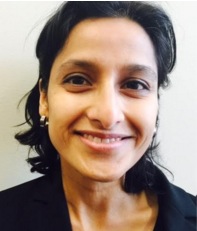
Munia Mitra, MD is a physician in private practice in San Francisco.

No comments:
Post a Comment